
Overview Handling chemical spills requires specialized knowledge and swift action to mitigate risks to health, property, and the environment. This …
( 9 Reviews )
18 Students
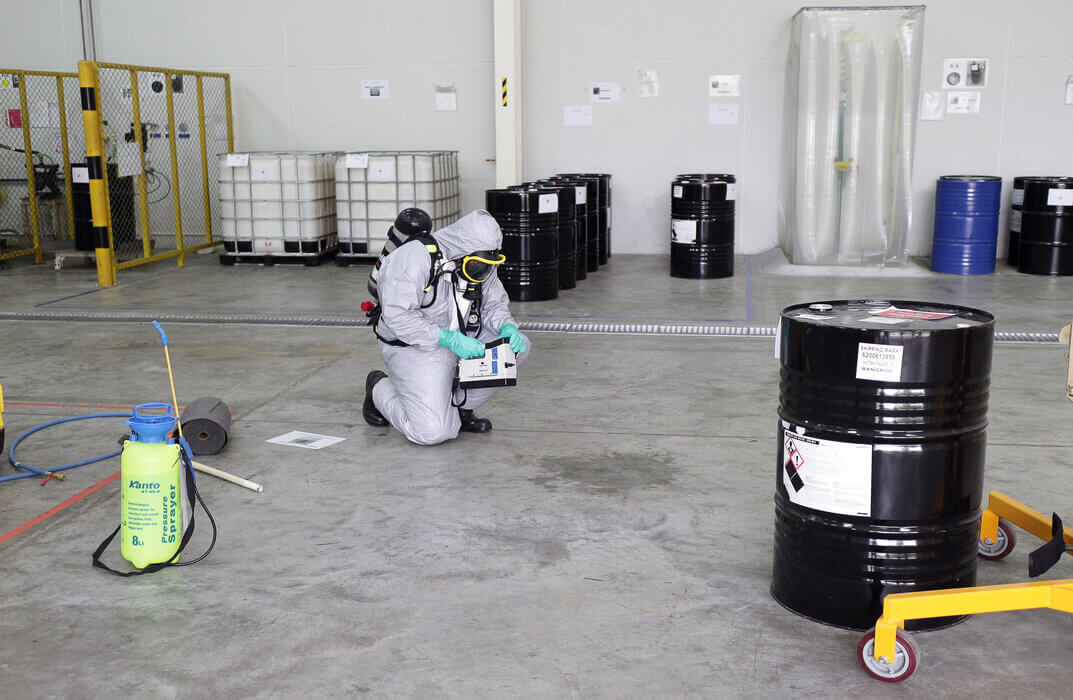
Handling chemical spills requires specialized knowledge and swift action to mitigate risks to health, property, and the environment. This course provides comprehensive training on the proper management of chemical spills in various settings, including laboratories, industrial sites, and transportation. You will learn about the types of chemicals commonly involved in spills, the potential hazards they pose, and the regulatory requirements for spill response. The course covers essential topics such as personal protective equipment (PPE), containment and cleanup procedures, and emergency response planning. Additionally, you will gain insights into risk assessment, communication strategies, and post-incident reporting. Through interactive modules and real-world scenarios, you will develop the skills necessary to effectively respond to and manage chemical spills, ensuring safety and compliance with legal standards.
On Completion of this online course, you’ll acquire:
This course is designed to equip individuals with the skills and knowledge required to manage chemical spills safely and effectively. Participants will explore the characteristics of various chemicals, learning to recognize the specific hazards associated with each. The course emphasizes the importance of personal protective equipment (PPE) and provides detailed guidance on its proper selection and use. Through practical exercises, you will learn how to contain and clean up spills, minimizing environmental impact and health risks. Emergency response planning is a critical component of the course, ensuring you are prepared to act swiftly in the event of a spill. By the end of the course, you will be proficient in conducting risk assessments, implementing communication strategies, and completing post-incident reports. This training is essential for anyone working in environments where chemical spills may occur, providing the confidence and competence to handle these incidents responsibly.
This course is ideal for laboratory technicians, industrial workers, transportation personnel, safety officers, and environmental health professionals. It is also suitable for anyone involved in the handling, storage, or transportation of chemicals, providing them with the essential skills to manage chemical spills effectively.
Participants should have a basic understanding of workplace safety and chemical handling. No prior experience with chemical spill management is necessary. Access to a computer and an internet connection is required to complete the online modules and assessments.
Upon successful completion of the Chemical Spill course, learners can obtain both a PDF certificate and a Hard copy certificate for completely FREE. The Hard copy certificate is available for a nominal fee of £3.99, which covers the delivery charge within the United Kingdom. Additional delivery charges may apply for orders outside the United Kingdom.
| Module 01: Introduction to Hazardous Chemicals | |||
| Introduction to Hazardous Chemicals | 00:14:00 | ||
| Module 02: Hazardous Chemicals and the Human Body | |||
| Hazardous Chemicals and the Human Body | 00:17:00 | ||
| Module 03: Common Hazardous Substances | |||
| Common Hazardous Substances | 00:16:00 | ||
| Module 04: Chemical Spills | |||
| Chemical Spills | 00:15:00 | ||
| Module 05: Preventing Spills | |||
| Preventing Spills | 00:13:00 | ||
| Module 06: Spill Response | |||
| Spill Response | 00:16:00 | ||
| Module 07: Spill Cleanup | |||
| Spill Cleanup | 00:14:00 | ||
| Module 08: Hazardous Waste Treatment and Disposal | |||
| Hazardous Waste Treatment and Disposal | 00:19:00 | ||
| Module 09: Oil Spills | |||
| Oil Spills | 00:18:00 | ||
| Module 10: Legislations Regarding Hazardous Chemicals in the UK | |||
| Legislations Regarding Hazardous Chemicals in the UK | 00:17:00 | ||
In the UK, the social care system is mainly managed by the local councils. People are directly employed by the councils. They often work together with the health commissioners under joint funding arrangements. Some people work for private companies or voluntary organizations hired by local councils. They help the local councils with their personal social services.
14-Day Money-Back Guarantee
COPYRIGHT © 2021 One Education
Oops! We could not locate your form.