

Mental Health First Aid (MHFA) is an internationally recognised training programme that teaches individuals how to identify, understand, and help someone who may be experiencing a mental health issue. Just as physical first aid helps you assist someone having a heart attack, Mental Health First Aid helps you assist someone experiencing a mental health crisis or developing a mental health problem.
Featured Snippet Definition: Mental Health First Aid is a skillsbased training course that teaches people to recognise the signs and symptoms of mental health problems, provide initial help, and guide a person toward appropriate professional support. It does not teach people to diagnose or provide therapy, but rather to act as a first point of contact and reassurance until professional help is received .
MHFA was first developed in Australia in 2000 and has since spread to over 25 countries, including the UK where MHFA England sets the national standard for training.
Why Mental Health First Aid Matters in the Workplace
Workplace mental health has shifted from a “nicetohave” to a business imperative. The modern workplace presents unique psychological challenges: excessive workloads, digital overwhelm, job insecurity, and blurred worklife boundaries all contribute to declining mental wellbeing.
MHFA matters in the workplace because it creates a proactive support system before crises occur. When employees struggle with stress, anxiety, or depression, they rarely seek help immediately. A trained Mental Health First Aider can spot early warning signs, initiate supportive conversations, and prevent issues from escalating into longterm sickness absence.
The business case is compelling. Organisations with robust mental health support report higher productivity, reduced absenteeism, improved staff retention, and enhanced employer brand. In an era where talent competition is fierce, demonstrating genuine commitment to employee wellbeing sets employers
The Mental Health Crisis in UK Workplaces
Key statistics highlighting the impact of workplace mental health challenges in the UK
| Metric | Figure | Source |
|---|---|---|
| Workers suffering work-related stress, depression or anxiety (2024/25) | 964,000 | - |
| Working days lost to mental health conditions annually | 22.1 million | - |
| Average days lost per mental health case | 22.9 days | - |
| Percentage of all work-related ill health cases (stress, depression, anxiety) | 51% | - |
| Increase in work-related mental health cases (last 12 months) | 24% | - |
| Cost to UK employers annually (Deloitte estimate) | £56 billion | Deloitte |
| Return on investment for mental health support | £5 returned per £1 spent | - |
Note: These figures illustrate the growing impact of mental health issues in UK workplaces, affecting both employee wellbeing and organisational productivity.
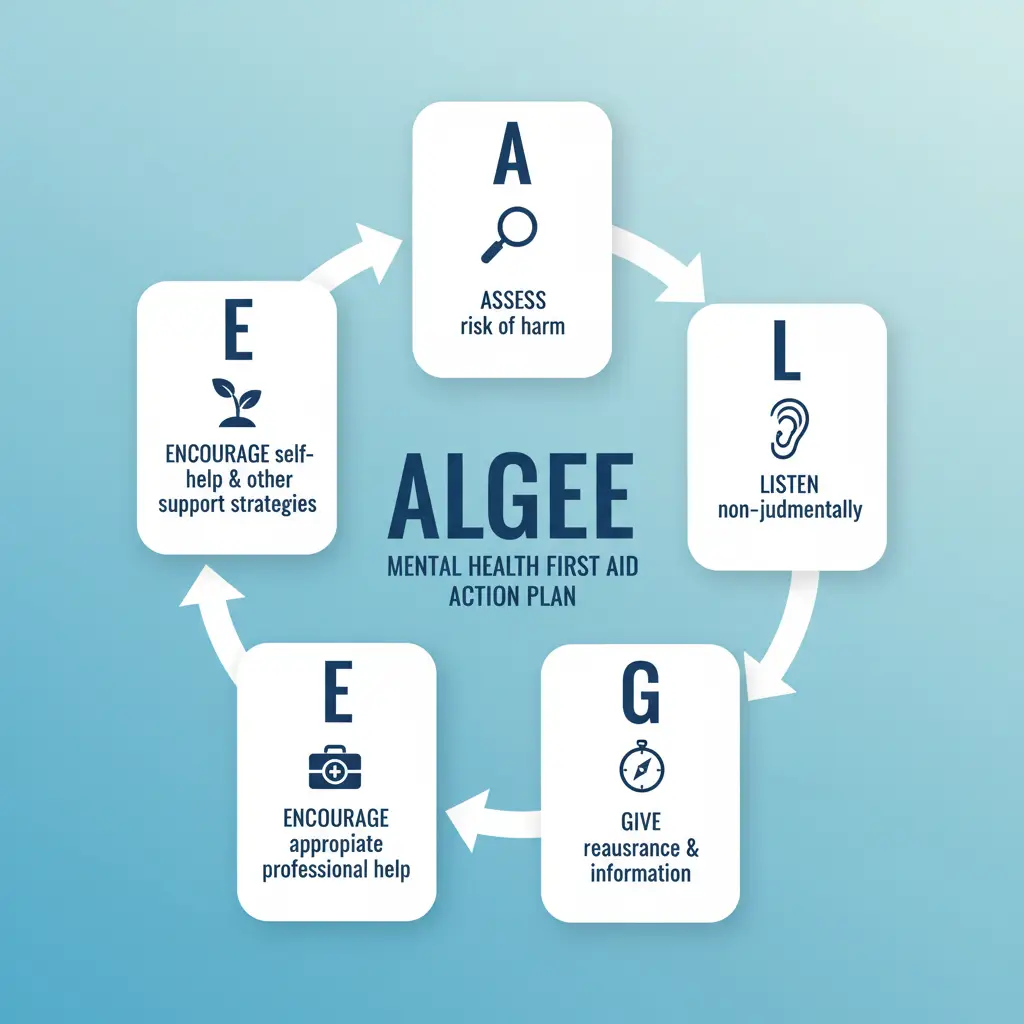
What Does a Mental Health First Aider Do?
A Mental Health First Aider serves as a first point of contact for colleagues experiencing mental health challenges. Their role is supportive, not clinical. Key responsibilities include:
– Recognising early signs of mental distress, including changes in behaviour, mood, or performance
– Initiating supportive conversations using active listening and empathy
– Providing immediate reassurance and nonjudgemental support
– Signposting to professional help, including GP services, Employee Assistance Programmes (EAPs), or mental health charities
– Reducing stigma by normalising conversations about mental health
– Protecting confidentiality while understanding duty of care boundaries
– Practising selfcare to prevent burnout in their supportive role
Critical distinction: Mental Health First Aiders do not diagnose conditions, provide therapy, or replace professional mental health services. They are trained to recognise when someone needs help and guide them toward appropriate resources while offering compassionate initial support .
Key Benefits of Mental Health First Aid Training
For Employees:
– Early intervention prevents mental health issues from escalating
– Reduced stigma creates a culture where seeking help is encouraged
– Improved confidence in discussing mental health challenges
– Better awareness of personal mental health and selfcare strategies
– Access to support from trained colleagues who understand their experiences
For Employers:
– Measurable ROI: Research shows £4.70 returned for every £1 invested in mental health support
– Reduced absenteeism: Proactive support cuts sickness absence rates significantly
– Decreased presenteeism: Employees work more productively when mentally healthy
– Enhanced retention: 92% of people agree MHFAiders contribute to healthier, more productive workplaces
– Legal compliance: Demonstrates adherence to duty of care responsibilities
– Talent attraction: 61% of employees have left or planned to leave jobs due to poor mental health
For Organisational Culture:
– Psychological safety increases team collaboration and innovation
– Open communication replaces silence and stigma around mental health
– Peer support networks strengthen workplace relationships
– Crisis prevention through early identification and intervention
How to Become a Mental Health First Aider in the UK
Becoming a certified Mental Health First Aider involves completing an accredited MHFA England course. Here’s the process:
Step 1: Choose Your Training Provider
Select an MHFA England accredited instructor member. Reputable providers include:
– MHFA England directly (open courses)
– St John Ambulance
– British Red Cross
– Mental health charities (Mind, Rethink Mental Illness)
– Independent accredited instructors
Step 2: Select Course Format
Options include:
– Online: Four live sessions (3 hours 45 minutes each) spread across two weeks
– Facetoface: Two consecutive days (09:00–17:00)
– Inhouse: Private training for your organisation (minimum 8, maximum 16 participants)
Step 3: Complete the Training
The course comprises 14 hours of learning across four modules, combining instructorled training, group discussions, and practical activities.
Step 4: Receive Certification
Upon completion, you receive:
– Digital MHFAider® certificate (valid for 3 years)
– Hard copy workbook and digital manual
– Walletsized ALGEE action plan card
– Access to the MHFAider Support App® (3 years)
– Invitation to join the Association of Mental Health First Aiders®
Step 5: Maintain Your Skills
Refresh your training every three years through an MHFA Refresher course (4–4.5 hours) to stay current with best practices .
Adult Mental Health First Aid Course Structure
Overview of sessions and topics covered in the standard MHFA training programme
| Session | Topics Covered |
|---|---|
| Session 1 | Why Mental Health First Aid? The MHFA action plan. What is mental health? Impact of mental health issues. Stigma and discrimination. Depression: symptoms, risk factors, and workplace impact. |
| Session 2 | Suicide statistics and first aid for suicidal crisis. Alcohol, drugs, and mental health. Non-judgemental listening skills. First aid for depression. Treatment resources and self-care. |
| Session 3 | Anxiety disorders: recognition and first aid. Crisis first aid after traumatic events. Cognitive distortions and CBT basics. Personality disorders. Eating disorders. Self-harm. |
| Session 4 | Psychosis: risk factors and warning signs. Schizophrenia and bipolar disorder. Crisis first aid for acute psychosis. Recovery and building resources. Action planning for using MHFA. |
Note: The MHFA course is designed to equip participants with practical skills to recognise, understand, and respond to mental health issues and crises.
Legal Responsibilities and Duty of Care
While Mental Health First Aid is not currently a legal requirement in UK workplaces, employers have clear obligations under existing legislation:
Health and Safety at Work etc Act 1974
Employers must ensure, so far as is reasonably practicable, the health, safety, and welfare of all employees—including mental wellbeing .
Health and Safety (FirstAid) Regulations 1981
Since November 2018, the HSE amended first aid needs assessments to include mental ill health. Employers must consider psychological hazards alongside physical risks .
Equality Act 2010
Mental health conditions may be classified as disabilities if they have a substantial, longterm adverse effect on normal daytoday activities. Employers must make reasonable adjustments and prevent discrimination .
Management of Health and Safety at Work Regulations 1999
Requires risk assessments to include workrelated stress and psychosocial hazards.
Best practice recommendation: The StevensonFarmer review “Thriving at Work” identified Mental Health First Aid as one of the core standards for mentally healthy workplaces. Forwardthinking organisations treat MHFA as essential rather than optional .
Implementing Mental Health First Aid in Your Organisation
Successful implementation requires more than simply sending staff on training:
1. Strategic Planning
– Conduct a mental health needs assessment across your organisation
– Determine appropriate MHFAidertoemployee ratios (recommendation: 1 per 10–20 employees)
– Identify champions at senior leadership level
2. Selection of MHFAiders
Choose individuals who:
– Have good interpersonal skills and empathy
– Are respected by colleagues across departments
– Can maintain confidentiality and boundaries
– Are committed to the role beyond the training course
3. Infrastructure Support
– Promote visibility: Display MHFAider photos/contact details on staff noticeboards
– Protect time: Ensure MHFAiders have adequate time away from core duties for support conversations
– Provide supervision: Regular peer support sessions for MHFAiders to debrief
– Set boundaries: Clear guidance on working hours, confidentiality limits, and when to escalate
4. Integration with Existing Support
MHFA should complement, not replace:
– Employee Assistance Programmes (EAPs)
– Occupational health services
– HR support and policies
– Manager training on mental health
5. Measurement and Review
Track metrics such as:
– Number of MHFA conversations (anonymised)
– Employee engagement scores
– Absence rates related to mental health
– Staff retention rates
– Feedback from MHFAiders and those supported
Common Challenges and How to Overcome Them
Challenge 1: Unclear Role Boundaries
Solution: Develop clear role descriptions specifying that MHFAiders provide initial support and signposting only, not counselling or crisis intervention. Establish clear escalation pathways .
Challenge 2: MHFAider Burnout
Solution: Implement regular peer supervision, limit the number of active MHFAiders per person, and ensure they use the MHFAider Support App for selfcare resources. Rotate roles every 2–3 years .
Challenge 3: Confidentiality Concerns
Solution: Train MHFAiders on data protection principles. Use the MHFAider Support App for anonymous reflective notes. Clarify when confidentiality must be breached (imminent risk of harm) .
Challenge 4: Lack of Senior BuyIn
Solution: Present the business case using HSE statistics and Deloitte ROI figures. Highlight legal duty of care obligations and reputational risks of inaction.
Challenge 5: “TickBox” Implementation
Solution: Embed MHFA within a comprehensive wellbeing strategy. Ensure MHFAiders are actively promoted, supported, and utilised rather than simply “having someone trained” .
Best Practices for Workplace Mental Health Support
To maximise the impact of your Mental Health First Aid programme:
– Train managers separately in mental health awareness and supportive conversations
– Create psychological safety where employees feel safe discussing mental health without career repercussions
– Review policies to ensure they support rather than penalise mental health disclosures
– Promote the role regularly through internal communications, not just during Mental Health Awareness Week
– Measure impact through wellbeing surveys and absence data
– Refresh training every three years to maintain skills and confidence
– Celebrate success stories (anonymised) to demonstrate the value of the programme
– Link to wider wellbeing initiatives including flexible working, workload management, and stress risk assessments
Learn Mental Health First Aid with Professional Training
Investing in accredited Mental Health First Aid training transforms workplace culture and equips your team with lifesaving skills. Whether you’re an individual seeking personal development or an organisation building a comprehensive wellbeing strategy, professional MHFA training delivers measurable returns.
Course Overview
The MHFA England Mental Health First Aid course is the gold standard in workplace mental health training. Delivered by accredited Instructor Members, this evidencebased programme combines theoretical knowledge with practical skills development.
Key Benefits
– Internationally recognised qualification valid for three years
– Comprehensive resource package including manual, workbook, and quick reference card
– Three years’ access to the MHFAider Support App® with 24/7 digital support
– Association membership connecting you with a national network of MHFAiders
– Evidencebased curriculum developed by mental health experts
– Flexible delivery options: online, facetoface, or inhouse
Skills You Will Gain
– Confidence to recognise signs of depression, anxiety, and psychosis
– Ability to apply the ALGEE® action plan in realworld scenarios
– Enhanced active listening and nonjudgemental communication skills
– Knowledge of professional resources and signposting pathways
– Understanding of boundaries, confidentiality, and selfcare
– Capacity to reduce stigma and promote mentally healthy environments
Certification Value
Upon completion, you become a qualified MHFAider® with credentials recognised by employers across the UK. The RSPH Level 3 Award in Mental Health First Aid offers additional professional accreditation for those seeking advanced qualifications .
Career Opportunities
MHFA certification enhances roles in:
– Human Resources and People Management
– Health and Safety
– Occupational Health
– Learning and Development
– Management and Leadership
– Healthcare and Social Care
– Education and Youth Work
Cost: Individual courses typically range from £150–£325 per person, with group discounts available for organisational bookings .
Conclusion
Mental Health First Aid represents a fundamental shift in how UK workplaces approach employee wellbeing. With 964,000 workers experiencing workrelated mental health issues and 22.1 million working days lost annually, the business and human costs of inaction are unsustainable .
Implementing MHFA is not merely about compliance or “doing the right thing”—it is a strategic investment that delivers £5 return for every £1 spent while creating cultures where people thrive . Trained MHFAiders serve as vital early warning systems, compassionate listeners, and bridges to professional support when colleagues need it most.
For organisations, the question is no longer whether to invest in Mental Health First Aid, but how quickly they can embed it within their wellbeing strategy. For individuals, becoming an MHFAider offers the opportunity to develop lifechanging skills while contributing to mentally healthier communities.
Take the next step: Explore accredited Mental Health First Aid training options today and join the growing movement transforming workplace mental health across the UK.
Frequently Asked Questions (FAQs)
Mental Health First Aid provides initial support and signposting, while therapy involves clinical treatment by qualified professionals. MHFAiders do not diagnose or treat conditions; they offer immediate assistance and guide individuals toward appropriate professional help .
No, MHFA is not currently mandatory, but employers have a legal duty of care under the Health and Safety at Work Act 1974 to protect employee mental health. The HSE recommends including mental health in first aid needs assessments .
MHFAiders receive three years’ access to the MHFAider Support App®, including 24/7 text support via Shout, signposting resources, selfcare tools, and quarterly webinars. They also join the Association of Mental Health First Aiders for ongoing peer support .
Best practice suggests one MHFAider per 10–20 employees, depending on risk factors. Highstress environments or organisations with limited professional support may require higher ratios .
Respect their autonomy while ensuring they know support remains available. Maintain regular contact, monitor for escalating risk, and consult with HR or occupational health if concerns persist. Never force intervention unless there is immediate danger .