Understanding the discrimination meaning is essential for anyone working in or studying UK health and social care. Discrimination occurs when individuals are treated unfairly, excluded, or disadvantaged because of personal characteristics such as age, disability, gender, race, religion, or sexual orientation. In care settings, discrimination can affect the quality of support people receive, undermine dignity, and lead to serious legal and safeguarding consequences.
Across the UK health and social care sector, recognising discrimination is not just a moral responsibility—it is a legal requirement under the Equality Act 2010 and a key focus of CQC inspections. From subtle indirect practices to overt unfair treatment, discrimination can take many forms and often goes unnoticed unless professionals are properly trained to identify and challenge it.
This blog provides practical tips and clear insights into the meaning of discrimination in UK health and social care, real-life examples, and how care professionals can promote equality, inclusion, and person-centred practice in everyday work.
What is Discrimination in Health and Social Care? A Clear Guide for UK Readers
Discrimination in health and social care is a serious issue in the UK. While many people assume discrimination only happens in extreme situations, it can also be subtle, indirect, and even unintentional. In fact, in health and social care settings, discrimination can affect patients, staff, families, and carers. This blog explains what discrimination means, why it matters, and how the UK’s laws protect people. Additionally, we explore real UK examples, practical steps to prevent unfair treatment, and how to take action when discrimination happens.
Understanding discrimination starts with a clear definition and examples. Furthermore, knowing your rights and responsibilities can make health and social care safer, fairer, and more inclusive for everyone.
Understanding What is Discrimination
Discrimination’s meaning varies depending on context. In general, discrimination is unfair or unequal treatment of someone because of who they are. In health and social care, discrimination affects access to services, treatment choices, and staff experiences.
Definition of Discrimination
At its simplest, discrimination is treating someone less favourably than others because of a characteristic they have. These characteristics are called protected characteristics under the UK’s Equality Act 2010. Examples include age, race, disability, sex, religion, and more.
In health and social care, discrimination often includes actions or practices that lead to poor care, unequal treatment, or exclusion.
Discriminatory Attitudes and Behaviours
Discriminatory attitudes are beliefs or assumptions that lead someone to treat others unfairly. In addition, these attitudes can affect decisions, behaviour, and interactions in health and social care settings. They may be deliberate, where someone knowingly treats a patient or colleague unfairly, or, alternatively, unintentional, where biases influence actions without conscious awareness.
Types of Discrimination in Health & Social Care (UK)
Discrimination can take many forms in health and social care settings. Understanding these types helps professionals meet legal and ethical responsibilities under equality legislation.
| Type of Discrimination | Definition | Example in UK Health & Social Care |
|---|---|---|
| Direct | Treating someone worse because of a protected characteristic. | Refusing treatment due to a patient’s religion. |
| Indirect | Rules or policies that disadvantage certain groups. | Requiring online forms affects older patients. |
| Disability | Unfair treatment linked to a disability. | Not providing a sign language interpreter. |
| Reasonable Adjustments | Failing to meet disabled people’s needs. | No wheelchair access or easy-read information. |
| Harassment | Unwanted behaviour that violates dignity. | Making derogatory comments about faith. |
| Victimisation | Treating someone badly for reporting discrimination. | Denying promotion after a complaint. |
| Age | Unfair treatment because of age. | Assuming older patients can’t make decisions. |
| Race / Ethnic | Treating someone unfairly because of race or ethnicity. | Providing lower-quality care to minority patients. |
| Gender | Treating someone unfairly because of gender. | Paying female staff less than male staff. |
Note: These examples are illustrative and may breach the Equality Act 2010 if not addressed appropriately.
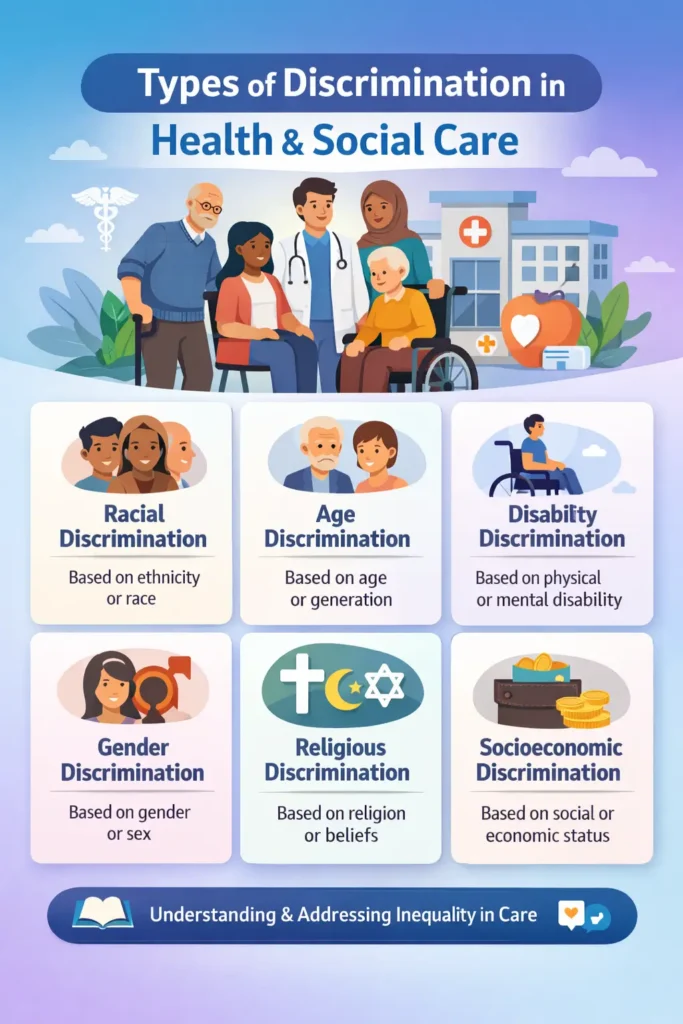
Types of Discrimination in Health and Social Care
Discrimination in health and social care remains a critical issue across the UK. Despite strong legislation such as the Equality Act 2010, discriminatory practices—both intentional and unintentional—can still affect the quality of care people receive. Understanding the types of discrimination in health and social care is essential for professionals, learners, and organisations committed to equality, safeguarding, and person-centred care.
What Is Discrimination in Health and Social Care?
Discrimination occurs when an individual or group is treated unfairly due to personal characteristics such as age, disability, gender, race, religion, or sexual orientation. In health and social care settings, discrimination can lead to:
– Poor quality of care
– Reduced access to services
– Emotional distress and loss of dignity
– Safeguarding failures
– Legal and regulatory consequences
Professionals have a duty of care to promote equality, respect diversity, and challenge discriminatory behaviour wherever it occurs.
1. Direct Discrimination
Direct discrimination happens when someone is treated less favourably because of a protected characteristic.
Example in care settings:
Refusing a treatment to a patient because of their ethnicity or denying a job role in a care home due to age.
Why it matters:
This is unlawful under UK law and can result in serious disciplinary or legal action.
2. Indirect Discrimination
Indirect discrimination occurs when policies or practices apply to everyone but disadvantage certain groups.
Example:
A GP surgery offering appointments only via online booking may indirectly discriminate against older adults or individuals with learning disabilities.
Key point:
Even unintentional policies can still be discriminatory.
3. Institutional Discrimination
Institutional discrimination is embedded within organisational systems, policies, or cultures.
Examples include:
– Lack of wheelchair access in care facilities
– Absence of translated health information
– Limited cultural awareness training for staff
This type of discrimination often goes unnoticed but has long-term impacts on service users.
4. Harassment
Harassment involves unwanted behaviour that violates a person’s dignity or creates a hostile environment.
In health and social care, this may include:
– Racist or sexist remarks
– Mocking a person’s disability or mental health condition
– Sexual comments or gestures
Harassment can be carried out by staff, service users, or visitors—and must always be addressed immediately.
5. Victimisation
Victimisation occurs when someone is treated unfairly because they have complained about discrimination or supported someone else’s complaint.
Example:
A care worker is being denied training opportunities after reporting discriminatory behaviour in the workplace.
Victimisation discourages reporting and undermines safe care environments.
6. Discrimination by Association
This happens when someone is treated unfairly because of their connection to another person with a protected characteristic.
Example:
A parent receiving poor service because they care for a disabled child.
7. Discrimination by Perception
Discrimination by perception occurs when someone is treated unfairly because others believe they belong to a particular group—even if that belief is incorrect.
Example:
Assuming a service user follows a specific religion and limiting their care options.
8. Age Discrimination
Age discrimination affects both older adults and younger people in health and social care.
Examples:
– Assuming older patients are confused or incapable
– Not taking young people’s mental health concerns seriously
Age-appropriate, respectful care is a cornerstone of person-centred practice.
9. Disability Discrimination
This includes failing to make reasonable adjustments for individuals with physical, sensory, or learning disabilities.
Examples:
– Lack of sign-language interpreters
– Inaccessible buildings
– Ignoring communication needs
UK care providers are legally required to adapt services to meet individual needs.
Why Addressing Discrimination Matters in the UK Care Sector
Tackling discrimination in health and social care is essential for:
– Meeting CQC standards
– Protecting service user rights
– Ensuring safeguarding and well-being
– Maintaining professional integrity
– Avoiding legal penalties and reputational damage
Promoting equality leads to safer, more inclusive, and higher-quality care outcomes.
How Health and Social Care Professionals Can Challenge Discrimination
– Follow equality and diversity policies
– Undertake regular training and CPD
– Use inclusive language and communication
– Report concerns through whistleblowing procedures
– Promote person-centred care and dignity
Every professional plays a role in creating a fair and respectful care environment.
Discrimination Types, UK Examples & Salary Ranges
| Type of Discrimination | UK Health & Social Care Example | Typical UK Salary Range |
|---|---|---|
| Direct Discrimination | Refusing medical treatment or care because of a person’s religion or belief. | £24,000 – £45,000 |
| Indirect Discrimination | Digital-only appointment systems disadvantaging older people or those with learning disabilities. | £22,000 – £40,000 |
| Disability Discrimination | Failure to provide a British Sign Language (BSL) interpreter for deaf patients. | £24,000 – £42,000 |
| Failure to Make Reasonable Adjustments | No wheelchair access, easy-read materials, or adapted communication tools. | £22,000 – £45,000 |
| Harassment | Mocking or making inappropriate comments about a colleague’s faith, disability, or sexual orientation. | £22,000 – £42,000 |
| Victimisation | Blocking promotion or training after a staff member raises a discrimination complaint. | £28,000 – £50,000 |
| Age Discrimination | Assuming older adults lack mental capacity or excluding them from care decisions. | £22,000 – £40,000 |
| Race / Ethnic Discrimination | Minority ethnic service users receive poorer communication or delayed treatment. | £22,000 – £45,000 |
| Gender Discrimination | Paying women less than men for the same role or overlooking them for leadership positions. | £24,000 – £50,000 |
Note: Salary figures reflect average UK earnings for frontline care workers, senior carers, nurses, managers, and allied health professionals.
Protected Characteristics Under the Equality Act 2010
To explain what direct discrimination means in UK law, it is helpful to know the nine protected characteristics listed in the Equality Act 2010:
1. Age: Protects people from unfair treatment because of how old or young they are.
2. Disability: Covers physical or mental conditions that affect daily life and require fair treatment and reasonable adjustments.
3. Gender Reassignment: Protects people who are transitioning or have transitioned to a different gender.
4. Marriage and Civil Partnership: Protects individuals from discrimination because they are married or in a civil partnership.
5. Pregnancy and Maternity: Protects women from unfair treatment during pregnancy and after childbirth.
6. Race: Includes colour, nationality, ethnic origin, and cultural background.
7. Religion or Belief: Protects people’s religious beliefs, non-religious beliefs, or lack of belief.
8. Sex: Protects people from discrimination because they are male or female.
9. Sexual Orientation: Protects people who are lesbian, gay, bisexual, or heterosexual.
These characteristics help define what unlawful discrimination applies to in health and social care. For example, refusing treatment because someone is from a particular racial background would be unlawful discrimination under the Equality Act.
In practice, ignoring these characteristics can lead to poor care, complaints, or legal action.
How and When Discrimination Can Happen
Discrimination in health and social care can occur at many levels. Some incidents are clear, while others are subtle.
In Patient Care
– Unequal access to treatments – Some patients may receive slower or limited care based on assumptions.
– Biased care decisions – Decisions influenced by age, disability, or other protected characteristics.
– UK scenario – Scheduling appointments during religious holidays can unintentionally disadvantage some patients.
For example, a hospital scheduling important appointments during religious holidays without offering alternatives could be considered discriminatory if it ignores patients’ beliefs and needs, therefore limiting their access to care and support.
In Staff‑to‑Staff Interactions
– Workplace bullying – Harassment or exclusion of colleagues due to age, gender, or ethnicity.
– Promotion bias – Some staff are unfairly favoured for roles or training.
– Unfair treatment – Unequal workload, denied leave, or lack of recognition for certain staff.
In Policy and Procedure
– Indirect discrimination – Rules or policies that unintentionally disadvantage a group, e.g., online-only forms.
– Audits and assessments – Regular checks ensure policies are fair and inclusive for all patients and staff.
Why Discrimination in Health and Social Care Matters
Discrimination in health and social care refers to treating people unfairly or less favourably because of characteristics such as age, disability, race, or religion. This type of discrimination affects people’s well-being, access to treatment, and overall quality of life. Moreover, it can reinforce inequality, reduce trust in services, and make some groups less likely to seek help when needed.
Research in the UK shows that people from minority ethnic groups are more likely to report poor experiences in health services, while disabled people often face barriers to care that meet their needs. To improve care, it is essential to identify discriminatory attitudes among staff and within organisational policies, as these biases can contribute to unequal treatment and exclusion.
How UK Law Protects People from Discrimination
In the UK, the key law governing discrimination is the Equality Act 2010. This Act protects people from discrimination in many areas of life, including healthcare and social services.
What the Equality Act Means for Health and Social Care
The Equality Act 2010 requires care providers to:
– Treat people fairly regardless of protected characteristics – Following the Health and Social Care Equality Act 2010, staff should ensure everyone receives equal treatment, no matter their age, disability, race, or religion. This helps to explain discrimination in health and social care clearly.
– Make reasonable adjustments for disabled people – Providing support like wheelchair access, easy-read materials, or longer appointment times ensures fair care. This aligns with the discrimination definition in health and social care, which includes failing to meet disabled people’s needs.
– Prevent harassment and victimisation – Staff must act to stop bullying, harassment, or unfair treatment based on personal characteristics. This also helps to identify discriminatory attitudes within the workplace.
– Review policies to ensure they do not create unfair disadvantages – Regularly checking procedures prevents unintentional bias and indirect discrimination, ensuring all patients and staff are treated fairly.
In addition, public services like the NHS have a public sector equality duty. This means they must actively consider how their services affect different groups.
For example, NHS trusts must assess how changes to service delivery might impact people with disabilities or older people. Ignoring this duty can lead to legal challenges or corrective action.
Preventing and Addressing Discrimination in Health and Social Care
Preventing discrimination requires action at every level. From individual staff to organisational leadership, everyone has a role to play.
Training and Awareness
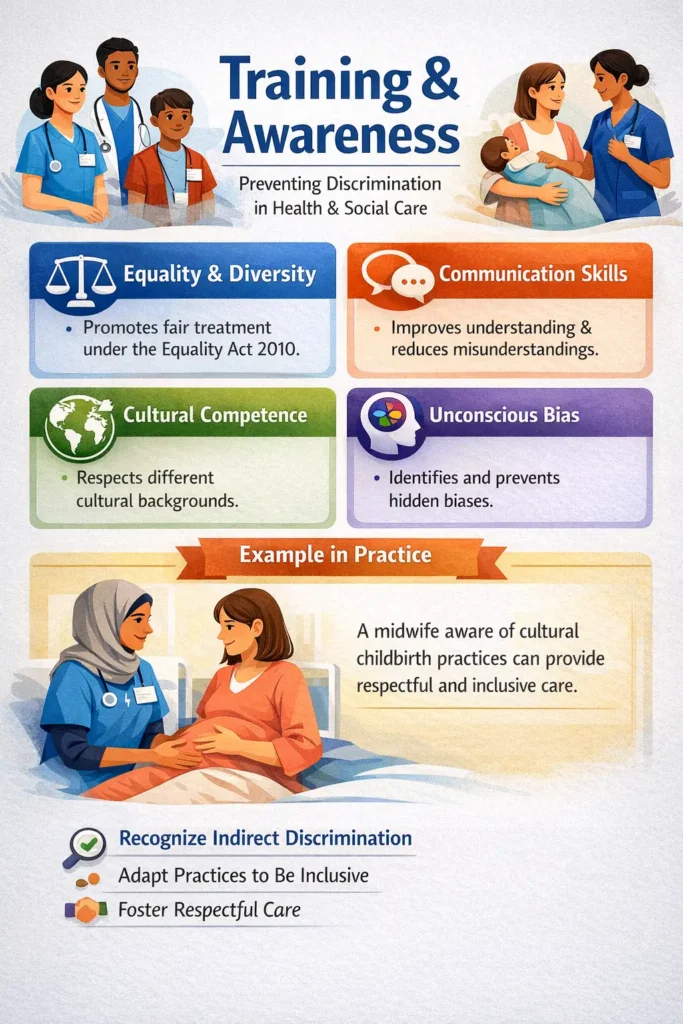
One of the most effective ways to prevent discrimination is through training. Health and social care workers need regular training about:
– Equality and Diversity – Ensures fair treatment for everyone under the Health and Social Care Equality Act 2010. Helps prevent deliberate discrimination and promotes inclusive care.
– Communication Skills – Effective communication is key to understanding patients’ needs and avoiding misunderstandings that could lead to harassment, discrimination or unfair treatment.
– Cultural Competence – Understanding different cultural backgrounds reduces bias and ensures services respect diversity. This helps define discrimination in health and social care by addressing inequality linked to race, religion, or culture.
– Understanding Unconscious Bias – Being aware of hidden biases prevents unintentional discrimination. It also supports staff in recognising discrimination in health and social care definition and taking steps to avoid unfair treatment.
For instance, a midwife who is aware of different cultural practices around childbirth is better able to provide respectful care. Moreover, training can help staff recognise indirect discrimination and adapt practices to be more inclusive.
Reporting Mechanisms
1. Internal Reporting in NHS and Private Health Settings
– Staff can raise concerns through internal procedures, such as line managers or human resources.
– Patients can use the NHS Complaints Procedure or PALS (Patient Advice and Liaison Service) to report issues.
– Encourages early resolution and helps organisations identify patterns of discrimination.
2. External Reporting
– Care Quality Commission (CQC): Regulates health and social care services; can investigate complaints about care standards.
– Equality Advisory Service: Provides guidance and support for issues related to discrimination and equality rights.
– Parliamentary and Health Service Ombudsman: Handles complaints that cannot be resolved internally, offering an independent investigation.
3. Benefits of Reporting Mechanisms
– Protects patients and staff.
– Ensures organisations comply with the Equality Act 2010.
– Promotes safer, fairer, and more inclusive health and social care environments.
Creating Inclusive Environments
In addition to policies and training, creating truly inclusive health and social care settings is essential. This can include:
1. Equality and Diversity – Ensures fair treatment for everyone under the Health and Social Care Equality Act 2010. It helps prevent deliberate discrimination and promotes inclusion for all staff and patients.
2. Communication Skills – Clear and respectful communication is essential to reduce misunderstandings and prevent unfair treatment. Proper communication helps everyone understand what is discrimination and how it can affect patients and colleagues.
3. Cultural Competence – Understanding and respecting different cultures and beliefs is key. This reduces bias and ensures care is inclusive, addressing examples of discrimination in health and social care related to race, religion, or cultural practices.
4. Understanding Unconscious Bias – Being aware of hidden biases helps staff avoid unfair treatment. It supports staff to define discrimination in health and social care and act in ways that are fair and equitable.
For example, a community health clinic that offers early‑morning and evening slots may better accommodate working carers. In addition, clinic signage in multiple languages can make services feel more welcoming to diverse communities.
Conclusion — Moving Forward Together
Discrimination in health and social care is not always easy to spot, but it has real consequences. By understanding what discrimination is — including direct discrimination, indirect discrimination, and discriminatory abuse — people can better protect themselves and others.
The UK’s Equality Act 2010 offers strong protections, and health services must act fairly. However, change also comes from awareness, training, and creating environments where all patients and staff are respected.
If you’ve experienced discrimination, know that you have options. Speak up, report concerns, and seek support. Health and social care should be safe and fair for everyone.
Frequently Asked Questions (FAQs)
An example could be a hospital refusing to provide an interpreter for a non‑English speaker. The lack of communication support can lead to poor care, which is discriminatory under the Equality Act.
Age discrimination can happen, particularly for older patients or younger staff. For example, assuming older adults cannot make their own decisions about treatment is discriminatory.
Yes. Patients can report discrimination via the NHS Complaints Procedure, through patient liaison services, or to the CQC.
If a health provider violates the Equality Act, they may face an investigation, legal action, or sanctions from regulatory bodies. In some cases, compensation may be awarded.
Yes. The main law is the Equality Act 2010, which protects people from discrimination in health, employment, education, and more.