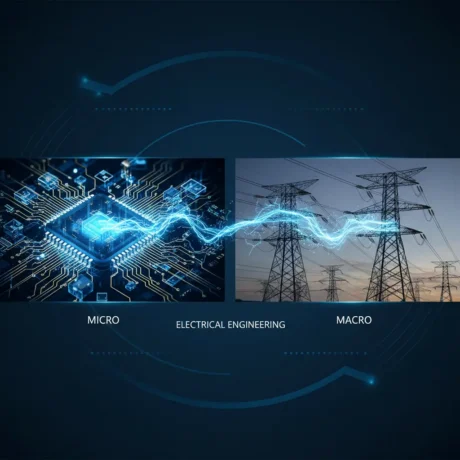

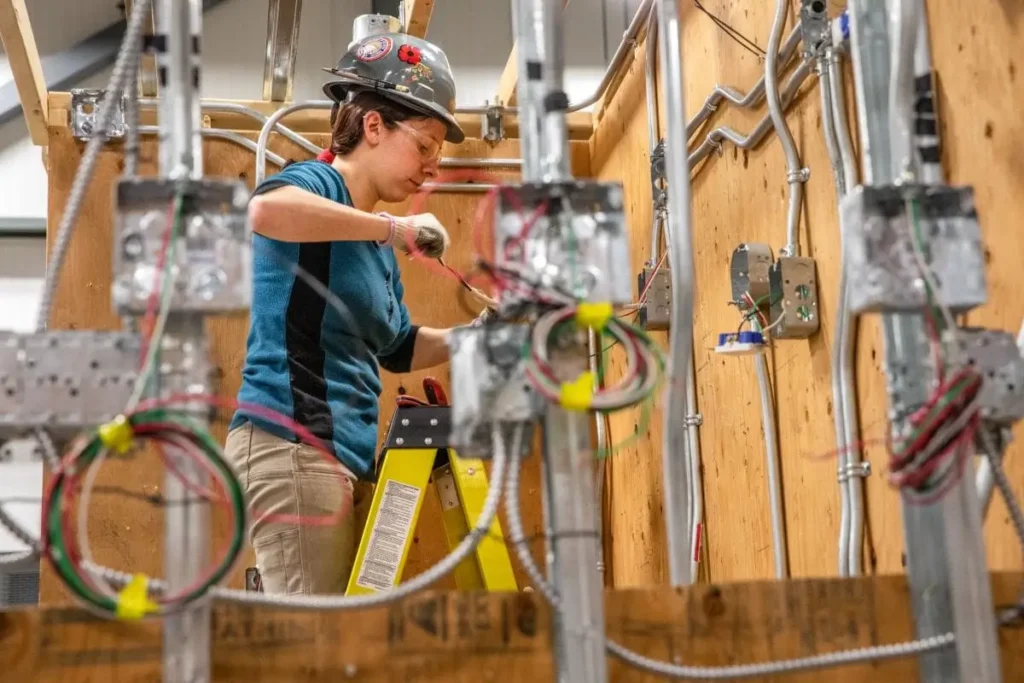
An electrician is a handson professional who installs, repairs, and maintains electrical systems in homes, businesses, and industrial facilities. They work directly with wiring, circuits, switches, and electrical equipment to ensure safe, reliable power distribution .
An electrical engineer is a designfocused professional who creates, develops, and tests electrical systems and equipment. They apply advanced mathematics, physics, and computeraided design (CAD) software to plan electrical networks, develop new technologies, and solve complex power system challenges .
While both work with electricity, electricians focus on implementation and maintenance, whereas electrical engineers concentrate on innovation, design, and system development .
Why This Career Choice Matters
The UK faces critical demand for both skilled tradespeople and engineering professionals. Understanding which path suits your interests, aptitudes, and lifestyle goals ensures longterm career satisfaction.
Industry Demand
– 76% of engineering employers struggle to fill key technical roles
– The electrical trade faces workforce shortages driven by netzero transitions and renewable energy expansion
– Both careers offer strong job security with diverse specialisation opportunities
Lifestyle Considerations
Electricians typically enjoy varied, active workdays across different sites. Electrical engineers usually work in offices, laboratories, or research facilities with more structured environments .
Financial Implications
Your choice affects earning potential, training costs, and career timeline. Electricians can qualify faster with lower initial investment, while engineers typically require longer academic study but may access higher longterm salaries .
Educational Pathways Compared
| Aspect | Electrician | Electrical Engineer |
|---|---|---|
| Entry Requirements | GCSEs (grades 9–3 for Level 2, 9–4 for Level 3) | A-Levels (Maths + Physics/Electronics, typically A–B grades) |
| Training Duration | 3–4 years (apprenticeship) or 1–2 years (fast-track + NVQ) | 3–4 years (BEng) or 4–5 years (MEng) |
| Training Cost | £0 (apprenticeship) to £10,000–£15,000 (private fast-track) | £9,250/year tuition (student loans available) |
| Work During Study | Yes—paid employment throughout | Limited—summer placements or year in industry |
| Key Qualifications | NVQ Level 3, AM2, 18th Edition, ECS Gold Card | BEng/MEng, IEng/CEng registration |
| Professional Body | JIB, NICEIC, NAPIT | IET (Institution of Engineering and Technology) |
Note: Electricians follow a vocational, work-based route, while electrical engineers typically follow an academic university pathway.
Key Skills for Each Role
Electrician Skills
Technical Competencies
– Electrical installation and termination
– Fault diagnosis and troubleshooting
– Testing and inspection (including 2391 qualification)
– Wiring regulations (BS 7671 18th Edition)
– Safe isolation procedures
Practical Abilities
– Manual dexterity and physical stamina
– Problemsolving under pressure
– Customer service and communication
– Time management across multiple jobs
– Adaptability to varied work environments
Electrical Engineer Skills
Technical Competencies
– Advanced mathematics and physics application
– CAD software (AutoCAD, MATLAB)
– Circuit analysis and design
– Project management
– Research and development methodologies
Professional Capabilities
– Complex problemsolving
– Innovation and creativity
– Technical report writing
– Team leadership and collaboration
– Continuous professional development
StepbyStep Career Progression
Electrician Progression Pathway
Step 1: Trainee/Apprentice (Year 14)
– Learn fundamental installation skills
– Develop health and safety awareness
– Build practical experience across domestic, commercial, and industrial sectors
Step 2: Qualified Electrician (Year 4+)
– Achieve NVQ Level 3 and ECS Gold Card
– Work independently on installations
– Earn £35,000£42,000 employed, £45,000£60,000 selfemployed
Step 3: Specialist or Supervisor (Year 8+)
– Pursue specialisations: fire alarms, inspection and testing, renewable energy
– Progress to site supervisor or electrical manager
– Earnings potential: £50,000£70,000
Step 4: Business Owner or Chartered Engineer (Year 12+)
– Establish electrical contracting business
– Or transition to electrical engineering via degree
– Top earners: £100,000+ with right specialisation and business acumen
Electrical Engineer Progression Pathway
Step 1: Graduate Engineer (Year 12)
– Starting salary: £27,000£32,000
– Apply theoretical knowledge in practical settings
– Develop industryspecific expertise
Step 2: Professional Engineer (Year 38)
– Midcareer salary: £38,000£51,600
– Pursue Incorporated Engineer (IEng) or Chartered Engineer (CEng) status
– Specialise in power systems, telecommunications, or electronics
Step 3: Senior Engineer/Manager (Year 915)
– Senior engineer salary: £91,000+
– Lead projects and teams
– Strategic decisionmaking responsibilities
Step 4: Director/Executive (Year 15+)
– Engineering director salaries exceed £200,000
– Boardlevel influence
– 62% of directors hold Chartered Engineer status
Salary Expectations and Benefits
| Career Stage | Electrician Salary | Electrical Engineer Salary |
|---|---|---|
| Entry Level | £18,000–£25,000 (apprentice/trainee) | £27,000–£32,000 (graduate) |
| Mid-Career | £35,000–£45,000 (qualified) | £38,000–£52,000 (4–9 years) |
| Senior | £50,000–£70,000 (specialist/self-employed) | £74,000–£91,000 (10–20 years) |
| Expert / Director | £70,000–£100,000+ (business owner/niche specialist) | £120,000–£200,000+ (chartered/director) |
Note: Electricians often increase earnings through self-employment, while electrical engineers typically see higher salaries at senior and director levels.
Common Career Choice Mistakes
Mistake 1: Choosing Based on Salary Alone
Both careers offer strong earning potential. Electricians in niche specialisations or successful selfemployment can outearn average engineers. Choose based on work style preference and aptitude.
Mistake 2: Underestimating Academic Requirements
Engineering demands strong mathematics and physics. Struggling with these subjects suggests the practical electrician route may suit better.
Mistake 3: Overlooking LongTerm Goals
Electricians can transition to engineering with further study , but this requires significant additional investment. Plan your ultimate career destination from the outset.
Mistake 4: Ignoring Work Environment Preferences
If you dread office work, engineering may frustrate despite higher status. If you dislike physical labour or weather exposure, sitebased electrical work won’t satisfy.
Mistake 5: Assuming Engineering is “Better”
Neither is superior—both are essential, respected professions. Engineers design systems; electricians make them work. Both require intelligence, skill, and dedication.
Future Trends in Electrical Careers
Renewable Energy Expansion
Both careers benefit from netzero transitions. Electricians install solar, heat pumps, and EV charging. Engineers design smart grids and renewable systems .
Automation and Smart Technology
Electricians increasingly work with building management systems and home automation. Engineers develop AIintegrated control systems and IoT devices.
Electrification of Transport
EV infrastructure creates demand for installation specialists and power distribution engineers.
Data Centre Growth
Critical infrastructure expansion requires both installation expertise and complex power system design .
Conclusion
Choosing between electrician vs electrical engineer careers depends on your personal strengths, learning preferences, and work environment desires. Electricians enjoy practical, varied work with faster entry and strong selfemployment potential. Electrical engineers access higher starting salaries, designfocused challenges, and clear progression to senior management.
Both careers are essential to modern infrastructure, offer strong earning potential, and face significant skills shortages ensuring longterm demand. Electricians can progress to engineering with further study, while engineers benefit from chartered status and international mobility.
Your next step? Assess your aptitude for academic study versus practical learning. Consider whether you prefer handson problemsolving or design innovation. Research training providers or universities that match your circumstances. The electrical sector welcomes dedicated professionals through either pathway—invest in quality training and enjoy a rewarding, futureproof career.
Frequently Asked Questions (FAQs)
Electricians install, maintain, and repair electrical systems handson. Electrical engineers design, develop, and test electrical systems using advanced mathematics and software .
Yes. Many electricians transition to engineering by completing a bachelor’s degree. Their practical experience provides strong foundations for design work .
Electrical engineers typically earn more at graduate entry (£27k vs £1825k), but experienced electricians can match midlevel engineer salaries. Top directors in both fields exceed £100,000
Engineering degrees have international recognition. Electrician qualifications are UKspecific, though experience is valued globally. Chartered Engineer status opens international opportunities
Both offer excellent prospects due to skills shortages. Electricians benefit from constant demand for maintenance and installation. Engineers are essential for innovation and infrastructure development .