
Electrical engineering is a broad engineering discipline focused on the study, design, and application of electrical and electronic systems. It encompasses everything from microelectronic circuits and telecommunications to large-scale power generation and distribution networks.
Electrical engineers combine physics, mathematics, and materials science to develop technologies that power modern society. The field splits into numerous specialisations, including electronics, power engineering, control systems, telecommunications, and signal processing. A comprehensive electrical engineering course provides both theoretical foundations and hands-on practical experience across these domains.
Why Electrical Engineering Skills Matter
The UK engineering sector contributes over £280 billion annually to the economy. Electrical engineers sit at the heart of this contribution, driving innovation in renewable energy, electric transportation, smart grids, and digital technology.
High Graduate Employability
Electrical engineering graduates enjoy excellent job prospects. Engineering UK reports that 85% of electrical engineering graduates find professional employment or further study within six months of graduation.
Versatile Career Options
The electrical engineering skills you learn open doors across industries: aerospace, automotive, energy, telecommunications, healthcare technology, and consumer electronics.
FutureProof Profession
As the UK transitions to net-zero carbon emissions and embraces Industry 4.0, demand for skilled electrical engineers continues to grow. Your skill set evolves with technology, ensuring long-term career relevance.
Core Technical Skills You Develop
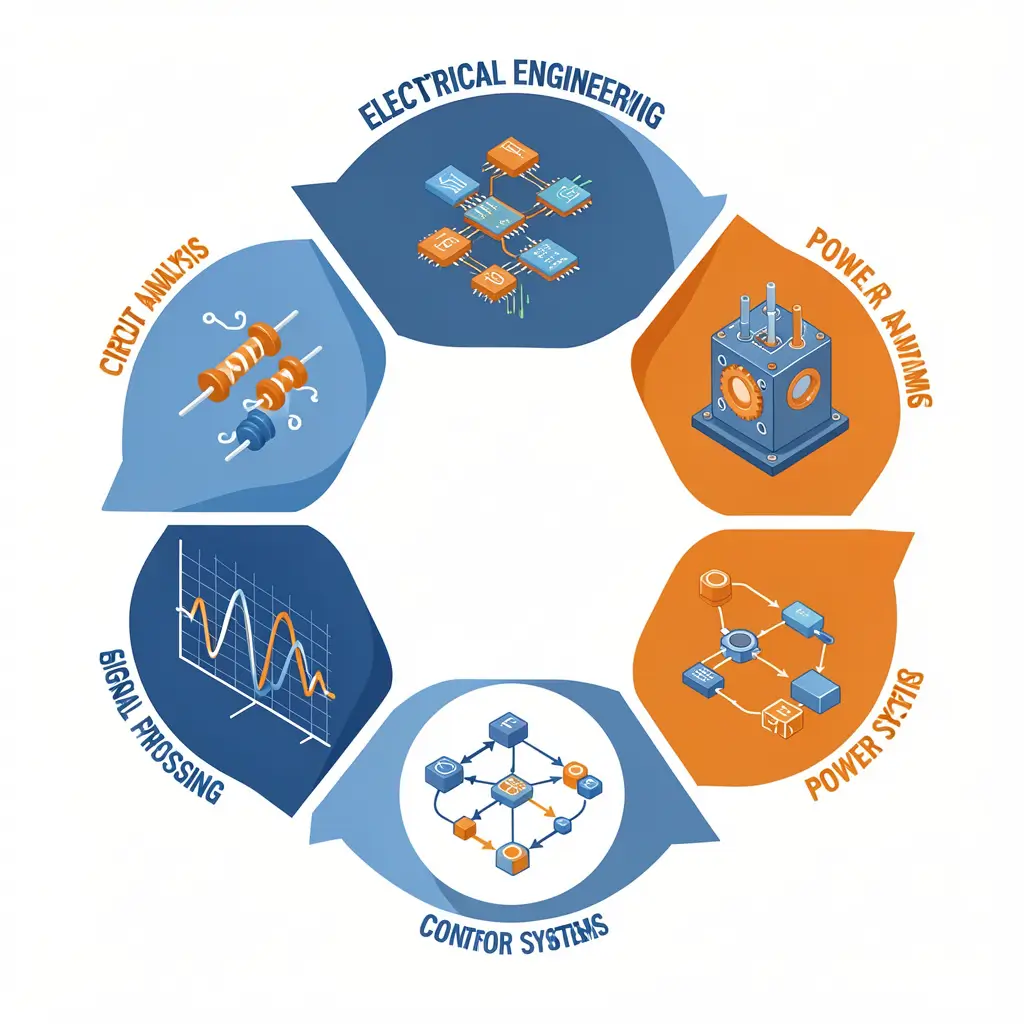
An electrical engineering course UK builds competency across multiple technical domains. Here's what you can expect to master:
| Skill Category | Key Competencies | Applications |
|---|---|---|
| Circuit Analysis | Ohm's Law, Kirchhoff's Laws, network theorems | Electronic device design |
| Programming | C/C++, Python, MATLAB, embedded C | Automation, data analysis |
| Power Systems | Generation, transmission, distribution | Grid infrastructure, renewables |
| Signal Processing | Fourier analysis, filtering, modulation | Communications, audio processing |
| Control Systems | PID control, state-space analysis | Robotics, process automation |
Note: Skill depth depends on course level (BEng/MEng) and specialisation areas.
Circuit Design and Analysis Skills
Electrical circuit design skills form the backbone of your technical education. You’ll develop proficiency in:
Analogue Circuit Design
Understanding how to design and analyze circuits using resistors, capacitors, inductors, and operational amplifiers. You’ll learn to create amplifiers, filters, oscillators, and power supply circuits that meet specific performance requirements.
Digital Electronics
Mastering logic gates, flip flops, counters, and memory devices. You’ll design combinational and sequential logic circuits, understand timing constraints, and troubleshoot digital systems.
PCB Design and Layout
Translating circuit schematics into physical printed circuit boards. This includes component selection, trace routing, grounding strategies, and manufacturing considerations. Modern courses incorporate CAD software skills for electrical engineers using tools like Altium Designer or Eagle.
Simulation and Verification
Using SPICE-based simulators (LTspice, Multisim) to verify circuit behaviour before physical prototyping. You’ll learn to model component nonidealities and predict real-world performance.
Programming and Software Skills
Modern electrical and electronic engineering skills UK programmes emphasize software competency:
Embedded Systems Programming
Embedded systems programming skills are crucial for IoT devices, automotive systems, and industrial control. You’ll learn:
– C and C++ for microcontrollers
– Real-time operating systems (FreeRTOS)
– Interrupt handling and memory management
– Peripheral interfacing (GPIO, ADC, UART, SPI, I2C)
High-Level Programming
Python dominates data analysis and automation in engineering. MATLAB remains essential for mathematical modelling and simulation. Many courses now include machine learning basics using TensorFlow or PyTorch.
Hardware Description Languages
VHDL and Verilog enable digital system design at the chip level. You’ll create synthesizable designs for FPGAs, understanding parallel processing architectures and timing closure.
Version Control and Collaboration
Git and GitHub are standard tools for managing codebases and collaborating on team projects. These industry skills gained in electrical engineering programmes in the UK mirror professional engineering practices.
Power Systems and Energy Skills
The UK energy transition makes power systems engineering skills increasingly valuable:
Generation and Transmission
Understanding synchronous generators, transformer design, and high voltage transmission lines. You’ll analyse three-phase systems, power flow, and system stability using professional software like ETAP or Power Factory.
Renewable Energy Integration
Solar PV and wind turbine system design, grid connection requirements, and energy storage solutions. You’ll study power electronics for DCAC conversion and maximum power point tracking algorithms.
Smart Grid Technology
Modern grid architecture, demand side management, and distributed generation. Courses cover communication protocols (IEC 61850), smart metering, and grid protection schemes.
Energy Efficiency
Power quality analysis, harmonic distortion, and energy management systems. These electrical engineering course skills for jobs UK employers specifically seek in sustainability-focused roles.
Electronics Design and Testing Skills
Electronics design and testing skills bridge theory and practical implementation:
Component Level Design
Selecting appropriate semiconductors, passives, and electromechanical components based on specifications, availability, and cost constraints.
Prototyping Techniques
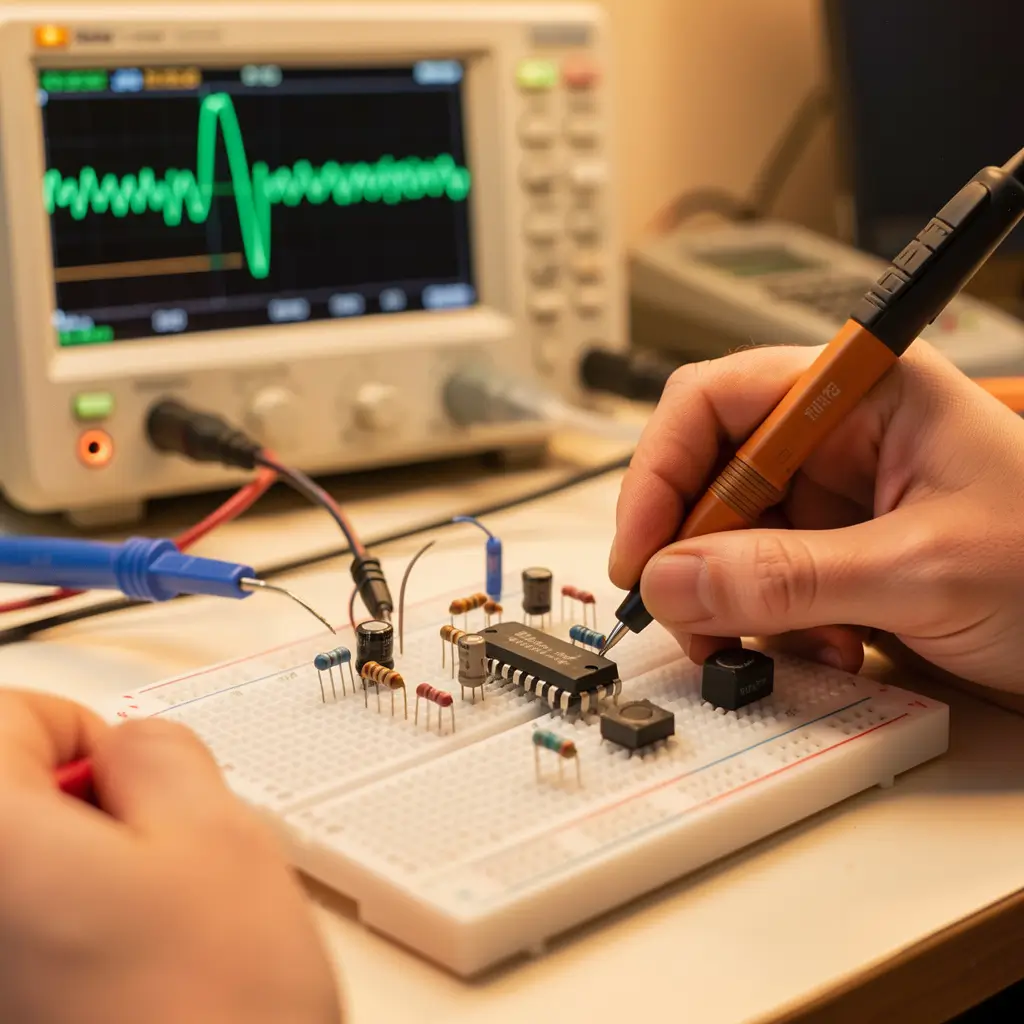
Breadboarding, soldering (through-hole and SMD), and wirewrapping for rapid iteration. You’ll develop steady hands and attention to detail essential for reliable construction.
Test Equipment Proficiency
Oscilloscopes, function generators, spectrum analysers, and logic analysers become extensions of your engineering intuition. You’ll learn measurement best practices and uncertainty analysis.
Design for Manufacturability
Understanding how design choices impact production costs, yield rates, and reliability. This includes Design for Test (DFT) and Design for EMC considerations.
Engineering Mathematics and Analysis
Engineering mathematics skills underpin every technical decision:
Linear Algebra and Calculus
Vector spaces, matrix operations, differential equations, and complex analysis. These tools model physical systems and solve optimisation problems.
Probability and Statistics
Reliability engineering, quality control, and experimental design. You’ll quantify uncertainty and make data-driven decisions.
Numerical Methods
When analytical solutions prove impossible, numerical techniques (finite element analysis, iterative solvers) provide answers. You’ll implement algorithms in Python or MATLAB.
Transform Theory
Fourier, Laplace, and Z transforms for analysing signals and systems in the frequency domain. Essential for signal processing skills and control system design.
Practical Laboratory Skills
Hands-on skills learned in electrical engineering labs differentiate graduates from theoreticians:
Experimental Design
Planning experiments to validate theoretical models, selecting appropriate instrumentation, and controlling variables.
Data Acquisition
Using LabVIEW or similar platforms to automate measurements, log data, and create virtual instruments.
Safety Protocols
High voltage safety, electrostatic discharge protection, and laboratory risk assessment. These practices protect you and your equipment throughout your career.
Troubleshooting Methodology
Systematic debugging approaches: isolating faults, hypothesis testing, and root cause analysis. These technical problem-solving and engineering skills development prove invaluable in professional settings.
Professional and Transferable Skills
The transferable skills from electrical engineering degree UK programmes extend beyond technical domains:
Engineering Project Management Skills
Planning complex projects, resource allocation, risk management, and milestone tracking. You’ll use Gantt charts, critical path analysis, and agile methodologies.
Teamwork and Communication for Engineers
Technical report writing, presentation skills, and collaborative problem solving. You’ll present to peers, write specifications, and justify design decisions to nontechnical stakeholders.
Critical Thinking and Creativity
Evaluating multiple solutions against competing constraints (cost, performance, reliability, sustainability). Innovation within boundaries defines engineering excellence.
Lifelong Learning Mindset
Technology evolves rapidly. Courses instil self-directed learning habits, keeping your electrical engineering degree skills current for career success throughout your professional life.
Industry-Specific Tools and Technologies
Best electrical engineering skills to learn in university UK programmes include industry-standard tools:
| Tool Category | Examples | Purpose |
|---|---|---|
| Circuit Simulation | LTspice, Multisim, PSpice | Virtual prototyping |
| PCB Design | Altium, KiCad, Eagle | Hardware implementation |
| Mathematical Computing | MATLAB, Mathematica | Analysis and modelling |
| Embedded Development | Keil, Arduino IDE, PlatformIO | Firmware creation |
| CAD/CAE | AutoCAD Electrical, SolidWorks | Mechanical integration |
| Power System Analysis | ETAP, DIgSILENT PowerFactory | Grid simulation |
Note: These tools are widely used across UK electrical engineering degree programmes and industry environments.
Career Applications of Electrical Engineering Skills
Your electrical engineering training skills in the UK translate to diverse roles:
Hardware Engineer
Designing electronic products from concept to production. Requires strong electronics design and testing skills and project management capabilities.
Power Systems Engineer
Working with utilities or renewable energy developers. Depends on power systems engineering skills and understanding of grid codes.
Control Systems Engineer
Developing automation for manufacturing, robotics, or process industries. Applies control systems knowledge and programming expertise.
Embedded Software Engineer
Programming microcontrollers for automotive, medical, or consumer devices. Combines embedded systems programming skills with hardware understanding.
Data Engineer/ML Engineer
Applying signal processing and programming skills to big data and artificial intelligence applications. Growing area for electrical engineering graduates.
Engineering Consultant
Advising organisations on technical strategy, efficiency improvements, or technology selection. Leverages breadth of essential electrical engineering skills.
Learn Essential Electrical Engineering Skills with Professional Training
While university programmes provide comprehensive foundations, targeted professional training accelerates specific competency development. Quality electrical engineering course curriculum and skills UK training bridges academic knowledge and industry requirements.
What Professional Training Offers
Focused Skill Development
Intensive programmes target specific gaps: advanced PCB design, industrial automation, or renewable energy systems. This complements broader academic study with immediate workplace applicability.
Industry Aligned Curriculum
Professional courses align with current employer needs, incorporating the latest standards (IET Wiring Regulations, ISO standards) and emerging technologies (widebandgap semiconductors, AI in engineering).
Practical Application
Short courses emphasise hands-on work with professional equipment. You’ll spend more time building, testing, and troubleshooting than in traditional academic settings.
Certification Value
Industry recognised certifications (Comp TIA, vendor-specific qualifications) demonstrate competency to employers. These credentials often accelerate early career progression.
Skills You’ll Strengthen
Through targeted electrical engineering practical and technical skills training in the UK, you’ll enhance:
– Advanced circuit simulation and verification techniques
– Professional PCB layout for manufacturability
– Industrial control system programming (PLC, SCADA)
– Power electronics design for renewable applications
– Technical documentation and standards compliance
– Project management for engineering contexts
Who Benefits from Supplementary Training
This approach suits:
– Recent graduates seeking to specialise before entering the job market
– Career changers with science backgrounds needing practical skills
– Working engineers updating competencies for new roles
– Technicians aspiring to engineering responsibilities
Whether you’re evaluating beginner skills taught in an electrical engineering course in the UK or seeking advanced specialisation, professional training accelerates your path to entry-level electrical engineering skills that UK employers demand.
Conclusion
An electrical engineering course delivers far more than theoretical knowledge. You develop a comprehensive toolkit spanning electrical circuit design skills, programming for electrical engineers, power systems engineering skills, and professional competencies that employers actively seek.
The skills learned in electrical engineering degree UK programmes prepare you for an evolving technological landscape. From renewable energy infrastructure to artificial intelligence hardware, your capabilities will shape the future. The combination of deep technical knowledge and practical problem-solving ability creates career resilience and opportunity.
Success requires more than completing assignments. Engage fully with laboratory work, seek additional project experience, and develop your communication abilities alongside technical expertise. The engineers who thrive combine strong analytical foundations with creativity, collaboration, and continuous learning habits.
Whether you’re considering university study, evaluating electrical engineering study skills UK requirements, or seeking professional development, investing in these competencies yields substantial returns. The UK needs skilled electrical engineers to meet net zero targets, modernise infrastructure, and maintain technological competitiveness. Your journey into this essential profession starts with building these fundamental skills.
Frequently Asked Questions (FAQs)
The most essential electrical engineering skills include circuit analysis, programming (C/Python/MATLAB), embedded systems design, and engineering mathematics. These fundamentals enable you to specialise in power systems, electronics, or control engineering as your career develops.
Yes, quality programmes include extensive laboratory work. You’ll prototype circuits, use professional test equipment, and complete design projects. However, the balance between theory and practice varies by institution—research course accreditation and facilities when choosing where to study
C/C++ remains essential for embedded systems and hardware interaction. Python dominates data analysis, automation, and machine learning applications. MATLAB is standard for mathematical modelling and simulation. VHDL/Verilog prove valuable for digital design roles.
Critical. Engineering mathematics skills underpin circuit analysis, signal processing, control theory, and electromagnetic field understanding. While software handles many calculations, understanding the mathematics enables proper model selection, result interpretation, and novel solution development.
You’ll master oscilloscopes, multimeters, spectrum analysers, and signal generators. Courses cover experimental design, data acquisition systems, soldering and prototyping techniques, and safety protocols for highvoltage work. These handson skills learned in electrical engineering labs prove immediately valuable in industrial roles.