What Is a Healthcare Assistant?
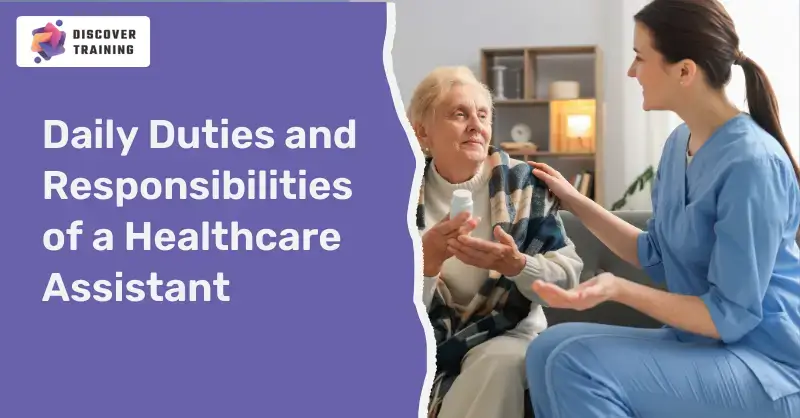
A Healthcare Assistant (HCA), also known as a Healthcare Support Worker or Nursing Assistant, provides hands-on care and support to patients in hospitals, care homes, GP practices, and community settings. HCAs work under the supervision of registered nurses and other healthcare professionals to deliver compassionate, person-centred care.
Featured Snippet Definition: A Healthcare Assistant’s daily duties include personal care (bathing, dressing, toileting), clinical observations (temperature, pulse, blood pressure), mobility assistance, meal support, and emotional companionship. Responsibilities vary by setting—hospital HCAs focus on acute clinical tasks, while care home HCAs build long-term relationships with residents.
The role is physically demanding, emotionally rewarding, and essential to the smooth functioning of healthcare teams. HCAs are often the staff members who spend the most time with patients, making them crucial for monitoring changes and ensuring comfort.
Why Daily Duties Vary by Setting
| Aspect | NHS Hospital | Care Home / Residential |
|---|---|---|
| Pace | Fast-paced, high turnover | Slower, long-term relationships |
| Focus | Acute clinical care | Holistic lifestyle support |
| Tasks | Observations, admissions, transfers | Personal care, activities, social engagement |
| Patients | Multiple patients, task-oriented | Consistent residents, relationship-building |
| Specialisation | Ward-specific (surgical, medical, A&E) | Condition-specific (dementia, complex needs) |
Note: Daily responsibilities for healthcare assistants vary depending on the care environment, patient needs, and level of clinical support required.
Core Responsibilities Across All Settings
Personal Care Duties
Assisting with Daily Living Activities:
– Bathing, showering, and personal hygiene
– Dressing and grooming
– Toileting and continence management
– Oral care and denture cleaning
– Hair washing and nail care
Techniques and Considerations:
– Maintain dignity and privacy throughout
– Use appropriate mobility aids and transfer techniques
– Observe skin condition during bathing (report redness, rashes, bruises)
– Ensure comfort with proper bedding and positioning
Mobility and Physical Support
– Assisting patients to move safely around wards or homes
– Using hoists, slide sheets, and transfer aids
– Helping with physiotherapy exercises
– Accompanying patients on walks or outdoor activities
– Preventing falls through vigilance and safe positioning
Nutrition and Hydration
– Serving meals and snacks at appropriate times
– Assisting with feeding when needed
– Monitoring fluid intake and output
– Working with dietitians for special dietary requirements
– Encouraging adequate nutrition and hydration
Emotional Support and Companionship
– Listening to patients’ concerns and feelings
– Providing reassurance during anxious moments
– Engaging in conversation and social interaction
– Supporting patients through difficult diagnoses or treatments
– Building trust through consistent, kind presence

Hospital Ward Duties
Clinical Observations and Monitoring
Hospital HCAs perform regular vital signs monitoring:
– Temperature, pulse, respirations, and blood pressure
– Oxygen saturation levels
– Blood glucose testing (in some settings)
– Weight and height measurements
– Fluid balance charts
Escalation responsibilities:
– Report abnormal observations immediately to registered nurses
– Document findings accurately in patient records
– Recognise signs of deterioration and act promptly
Ward-Based Tasks
– Bed management: Making beds, cleaning bed areas, preparing for new admissions
– Patient transfers: Assisting with admissions, discharges, and interdepartment moves
– Equipment care: Ensuring clean, functional equipment; stocking supplies
– Infection control: Following hand hygiene protocols, using PPE appropriately
Specialised Ward Duties
Surgical Wards:
– Preoperative preparation
– Postoperative observations
– Wound care assistance (under nurse supervision)
– Drain and catheter care
A&E and Acute Settings:
– Rapid patient turnover
– Triage support
– Emergency observations
– Fast-paced, high-pressure environment
Care Home and Residential Duties
LongTerm Relationship Building
In care homes, HCAs become consistent presences in residents’ lives:
– Building trusting relationships over time
– Learning individual preferences and routines
– Providing personalised care that respects autonomy
– Supporting family involvement and communication
Lifestyle and Social Support
– Activities and engagement: Assisting with hobbies, games, and social events
– Outings and appointments: Accompanying residents to shops, clinics, or family visits
– Maintaining a homelike environment: Supporting comfort, choice, and dignity
– End-of-life care: Providing compassionate palliative support
Specialist Care Needs
Many care homes specialise in conditions requiring specific skills:
– Dementia care: Managing responsive behaviours, maintaining routine, reducing anxiety
– Physical disabilities: Complex moving and handling, equipment use
– Learning disabilities: Communication support, behavioural understanding
– Palliative care: Comfort measures, family support, dignity in dying
Community and Home Care Duties
OnetoOne Support
In domiciliary care, HCAs provide individualised support:
– Personal care in patients’ own homes
– Medication prompting and administration (according to local policy)
– Meal preparation and household tasks
– Shopping and community access
– Respite for family carers
Complex Care at Home
Some HCAs support clients with significant needs:
– Acquired brain injury
– Spinal cord injuries
– Neurological conditions
– End-of-life care at home
– Ventilator and feeding tube support (with specialist training)
Independence Promotion
A key community HCA role is enabling independence:
– Encouraging clients to do as much as possible for themselves
– Building confidence and self-esteem
– Supporting rehabilitation goals
– Maintaining safety while promoting autonomy
Clinical Skills and Observations
| Skill | Application | Training Required |
|---|---|---|
| Vital signs | Temperature, pulse, blood pressure, respirations | Care Certificate + workplace assessment |
| Phlebotomy | Taking blood samples | Additional specialist training |
| Cannulation | Inserting IV lines (in some roles) | Competency-based training |
| Catheter care | Emptying bags, hygiene maintenance | Care Certificate Standard 15 |
| Wound dressing | Simple dressing changes | Under nurse supervision |
| Blood glucose | Testing and recording | Competency assessment |
| Peak flow | Respiratory monitoring | Training as required |
Documentation and Communication
Record Keeping
HCAs must maintain accurate, timely records:
– Vital signs charts
– Fluid balance charts
– Food and nutrition records
– Mobility and activity records
– Incident reports
– Care plan updates
Documentation principles:
– Clear, legible, factual
– Timely (contemporaneous)
– Confidential and secure
– Signed and dated
– Objective rather than subjective
Communication Responsibilities
With patients and families:
– Explaining care procedures clearly
– Listening to concerns and preferences
– Providing emotional support
– Respecting confidentiality and dignity
With healthcare teams:
– Reporting observations and changes promptly
– Participating in handovers
– Attending team meetings
– Escalating concerns appropriately
Interprofessional collaboration:
– Working with nurses, doctors, therapists, and social workers
– Contributing to multidisciplinary care planning
– Respecting the scope of practice and professional boundaries
Common Mistakes and How to Avoid Them
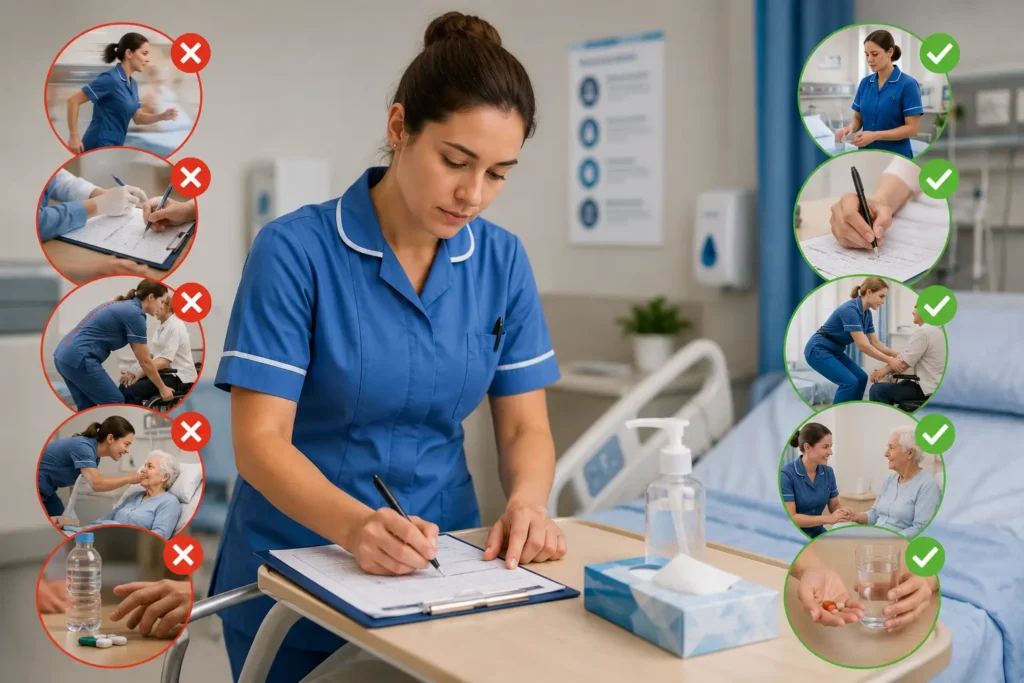
Mistake 1: Rushing Personal Care Tasks
The Problem: Prioritising speed over dignity and thoroughness.
The Solution: Allow adequate time for personal care. Maintain conversation, ensure privacy, and complete tasks properly. Rushed care leads to missed skin issues, discomfort, and undignified experiences.
Mistake 2: Inadequate Documentation
The Problem: Failing to record observations or changes promptly.
The Solution: Document immediately after completing tasks. If it isn’t recorded, it didn’t happen. Accurate records are essential for continuity of care and legal protection.
Mistake 3: Poor Moving and Handling Technique
The Problem: Risking injury to self or patients through incorrect lifting or transfers.
The Solution: Always use approved techniques and equipment. Never attempt manual lifts that exceed your training. Request assistance when needed. Your safety enables you to care for others.
Mistake 4: Overstepping Professional Boundaries
The Problem: Attempting tasks beyond your competence or scope of practice.
The Solution: Know your limits. HCAs cannot: administer medications (unless specifically trained and delegated), make clinical decisions, or provide care beyond their competency. Always work under a nurse’s supervision.
Mistake 5: Neglecting Emotional Needs
The Problem: Focusing solely on physical tasks while ignoring patients’ emotional state.
The Solution: Remember that companionship and emotional support are core HCA responsibilities. A kind word, attentive listening, and genuine presence can be as healing as any clinical intervention.
Learn with Professional Training
Course Overview
Professional healthcare assistant training provides the comprehensive skills and knowledge needed to perform daily duties safely, compassionately, and effectively. Whether you’re entering healthcare for the first time or seeking to formalise your experience with recognised qualifications, these programmes cover all aspects of the HCA role—from personal care techniques to clinical observations and professional communication.
Key Benefits
– NHS-aligned curriculum: Meets Care Certificate and CQC requirements
– Practical skills focus: Hands-on training in personal care, moving and handling, and clinical observations
– Flexible delivery: Online theory combined with workplace practice assessment
– Recognised certification: CPD-accredited and valued by employers
– Career progression ready: Prepares for senior HCA roles and nursing associate pathways
Skills You Will Gain
Upon completion of healthcare assistant training, you will be able to:
– Deliver dignified, safe personal care (bathing, dressing, toileting)
– Perform clinical observations and document findings accurately
– Move and handle patients safely using appropriate equipment
– Assist with nutrition, hydration, and meal support
– Provide emotional support and companionship
– Maintain infection prevention and control standards
– Communicate effectively with patients, families, and healthcare teams
– Recognise and respond to safeguarding concerns
– Work within professional boundaries and the scope of practice
– Contribute to multidisciplinary care planning
Career Opportunities
Healthcare assistant training prepares you for:
– NHS hospital ward HCA roles
– Care home and residential care positions
– GP practice healthcare support
– Community and domiciliary care work
– Mental health support worker specialisation
– Maternity support worker pathways
– Progression to Senior HCA (Band 3)
– Nursing associate or registered nurse training
Conclusion
The daily duties and responsibilities of a Healthcare Assistant are diverse, demanding, and deeply meaningful. From the early morning personal care routines to the final evening observations, HCAs provide the hands-on support that enables patients to maintain dignity, comfort, and safety throughout their healthcare journey.
Whether working in the fast-paced environment of an NHS hospital ward, the relationship-focused setting of a care home, or the individualised context of community care, HCAs adapt their skills to meet diverse needs. The core competencies—personal care, clinical observations, mobility support, nutrition assistance, and emotional companionship—remain constant, though their application varies by setting.
Success in this role requires more than technical competence. It demands empathy, communication excellence, attention to detail, and professional boundaries. The ability to notice subtle changes, document accurately, and communicate clearly with multidisciplinary teams can literally save lives.
For those considering this career, professional healthcare assistant training provides the foundation for safe, effective practice. For those already working as HCAs, continuous development opens doors to senior roles, specialisation, and progression to registered professional status.
The healthcare sector needs skilled, compassionate HCAs more than ever. With over 700,000 vacancies and growing demand for care services, your daily duties as a Healthcare Assistant will not only provide personal fulfilment but also address one of society’s most pressing needs. Start your journey today, and discover the profound rewards of a career dedicated to caring for others.
Frequently Asked Questions (FAQs)
The main daily duties include personal care (bathing, dressing, toileting), clinical observations (temperature, pulse, blood pressure, respirations), mobility assistance, meal support, emotional companionship, and documentation. Hospital HCAs focus more on acute clinical tasks and observations, while care home HCAs emphasise long-term relationship building and lifestyle support.
Yes—taking vital signs is a core HCA responsibility. This includes temperature, pulse, respirations, and blood pressure. Some HCAs also perform blood glucose testing, peak flow measurements, and phlebotomy (with additional training). Accurate observation and prompt reporting of abnormalities are essential skills.
Hospital HCAs work in fast-paced acute settings with high patient turnover, focusing on clinical observations, admissions, transfers, and task-oriented care across multiple patients. Care home HCAs provide slower-paced, long-term care, building consistent relationships with residents and focusing on holistic lifestyle support, social engagement, and personal care.
HCAs report observations and changes promptly, participate in handovers (verbal or written), attend team meetings, and escalate concerns through appropriate channels. They use the SBAR framework (Situation, Background, Assessment, Recommendation) in many settings to ensure clear communication. Effective communication ensures patient safety and care continuity.
HCAs must know basic life support (CPR), choking manoeuvres (abdominal thrusts), anaphylaxis recognition, and emergency call procedures. They should understand fire evacuation procedures, know the location of emergency equipment, and recognise when to call for immediate help. Regular training updates are essential.