What Are Career Paths in Children and Young People’s Mental Health?
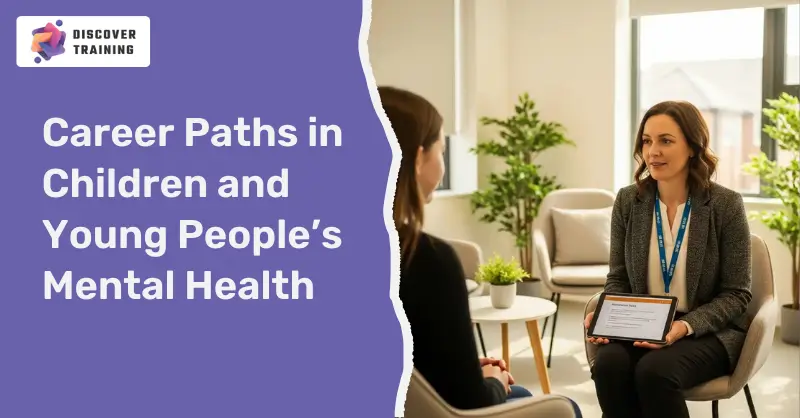
Career paths in children and young people’s mental health encompass diverse professional roles dedicated to supporting the emotional well-being and psychological health of individuals aged 0-25. These careers span clinical, educational, community, and social care settings, offering multiple entry points and progression routes for people with varied backgrounds and qualifications.
Featured Snippet Definition: Career paths in children and young people’s mental health include roles such as Children’s Wellbeing Practitioner (CWP), Education Mental Health Practitioner (EMHP), CAMHS nurse, child psychologist, and youth counsellor. Entry routes range from degree apprenticeships to postgraduate training, with salaries typically starting at NHS Band 4 (£25,000+) and progressing to Band 7+ for senior roles.
With 1 in 5 young people now experiencing mental health problems and demand for services at unprecedented levels, these careers offer both professional fulfilment and job security. The field is actively expanding, with government commitments to increase mental health support in schools and communities, creating new opportunities.
Why Choose a Career in Youth Mental Health?
The Growing Need
The mental health crisis among young people has created an urgent demand for skilled professionals:
– 910,567 young people were referred to CAMHS in 2023/24
– 20.3% of 8-16 year olds have a probable mental health condition—up 62% since 2017
– 78,577 young people waited over a year for treatment in 2023/24
– 74% of teachers report that poor mental health negatively impacts learning
Professional Rewards
A career in CAMHS or youth mental health services offers :
– Diverse specialisms including inpatient acute care, forensic services, community early intervention, home intensive treatment, and learning disability support
– Rewarding work with tangible positive outcomes for vulnerable young people
– Continuous development with structured training and supervision
– Job security in an expanding sector with government investment
Career Flexibility
Roles exist across multiple settings:
– NHS Child and Adolescent Mental Health Services (CAMHS/CYPMHS)
– Schools and colleges (Mental Health Support Teams)
– Local authority children’s services
– Voluntary and community sector organisations
– Private practice and independent providers

Career Pathway Overview in Mental Health Careers
| Role Level | Typical Positions | NHS Band | Salary Range (2024/25) |
|---|---|---|---|
| Entry / Support | Healthcare Support Worker, Assistant Practitioner | Band 3–4 | £22,000 – £26,000 |
| Practitioner | Children's Wellbeing Practitioner (CWP), EMHP, Staff Nurse | Band 5 | £28,000 – £35,000 |
| Senior Practitioner | Senior CWP, Senior EMHP, Mental Health Practitioner | Band 6 | £35,000 – £42,000 |
| Advanced / Specialist | Clinical Specialist, Team Leader, Senior Practitioner | Band 7 | £43,000 – £50,000 |
| Leadership | Service Manager, Consultant Practitioner, Matron | Band 8a+ | £52,000 – £70,000+ |
| Consultant | Consultant Clinical Psychologist, Consultant Psychiatrist | Band 8c–9 | £70,000 – £100,000+ |
Note: Salary ranges are approximate NHS pay scales for 2024/25 and may vary depending on experience, location, employer, and specialist responsibilities.
Children’s Wellbeing Practitioner (CWP) Pathway
Role Overview
Children’s Wellbeing Practitioners (CWPs) are trained to assess and support children and young people with common mental health difficulties, particularly mild to moderate symptoms of anxiety, depression, and behavioural difficulties.
They deliver low-intensity interventions based on cognitive behavioural therapy (CBT) and guided self-help, working with CYP and their parents/carers to support self-management of recovery.
Key Responsibilities
– Deliver evidence-based low-intensity CBT interventions
– Triage patients and signpost to appropriate services
– Build relationships across the mental health care system
– Work with children, young people, and families from diverse backgrounds
– Deliver interventions one-to-one (in person, telephone, or online) or in groups
– Manage referrals and coordinate with other agencies
Training Route
The CWP training is a one-year programme combining university study with supervised practice :
Entry Requirements:
– Experience working with children and young people
– Ability to study at degree level (maths and English skills)
– Knowledge of child and adolescent development
– Excellent interpersonal skills
Training Structure:
– 30-35 days of classroom-based training distributed over the academic year
– The majority of time spent in supervised practice within a CYP mental health service
– Part-time university attendance with increasing workplace hours as skills develop
Qualification Options:
– Graduate Certificate (for those without a degree)
– Postgraduate Certificate (for graduates)
Registration and Accreditation
CWPs must register with either:
– British Psychological Society (BPS)
– British Association of Behavioural and Cognitive Psychotherapies (BABCP)
Registration opened in April 2023 and is mandatory for all qualified CWPs
Career Progression from CWP
| Progression Route | Requirements | Outcome |
|---|---|---|
| Senior CWP | 2+ years of experience | Band 6 role with supervision responsibilities |
| Senior Wellbeing Practitioner (SWP) | 2+ years as CWP / EMHP | Band 6 role specialising in trauma, OCD, or tics |
| High Intensity Training | Completion of 2-year practice requirement | Band 7–8 clinical specialist opportunities |
| Management | Experience and leadership skills | Service Manager or Team Leader positions |
Note: Career progression opportunities may vary depending on NHS trust, additional qualifications, specialist training, and professional experience.
CAMHS Clinical Roles and Progression
Multi-Disciplinary Team Structure
CAMHS services employ diverse professionals working collaboratively :
Crisis Services
– Provide assertive outreach, including rapid response (up to 72 hours)
– Home treatment (4-6 weeks) to avoid inpatient admission
– Paediatric support for ward-based assessments
Inpatient Services
– Hope Unit and similar facilities provide 24/7 care
– Multi-disciplinary teams including psychiatrists, psychologists, nurses, occupational therapists, dieticians, and teachers
Community Services
– Early intervention and assessment
– Home intensive treatment
– Attachment and family work
– Specialist provision for children in care
Nursing Pathway in CAMHS
| Stage | Role | Band | Focus |
|---|---|---|---|
| Entry | Healthcare Support Worker | Band 3–4 | Assistant role supporting qualified staff |
| Registered | Staff Nurse (RMN / RNLD) | Band 5 | Direct clinical care, assessment, and intervention |
| Experienced | Senior Mental Health Practitioner | Band 6 | Managing complex cases and mentoring junior staff |
| Advanced | Clinical Nurse Specialist | Band 7 | Specialist expertise and leadership responsibilities |
| Consultant | Nurse Consultant | Band 8a–8c | Strategic leadership and advanced clinical practice |
Note: CAMHS nursing career progression may vary depending on NHS trust, qualifications, specialist training, and clinical experience.
Key Differences Between CWP and EMHP
Education Mental Health Practitioners (EMHPs) work in schools and colleges, supporting children and young people through low-intensity CBT interventions and whole-school mental health approaches.
| Aspect | CWP | EMHP |
|---|---|---|
| Primary Setting | Community services, CAMHS, and GP practices | Schools and colleges |
| Training Focus | Broad child and young people (CYP) mental health support | Education-specific mental health contexts |
| Collaboration | Multi-agency and health-focused teams | Teachers, education staff, and school leadership teams |
| Interventions | Individual and group mental health interventions | Often group-based and whole-school approaches |
Note: Both CWP and EMHP roles support children and young people’s mental health, but EMHPs focus specifically on educational environments and school-based wellbeing support.
Senior and Advanced Practice Opportunities
Senior Wellbeing Practitioner (SWP)
The SWP role represents the next step for experienced CWPs and EMHPs :
Training: Two-year funded programme paid at Band 5
Qualification: Ability to deliver adapted low-intensity interventions for:
– Trauma
– OCD
– Tics and Tourette’s
– Learning disabilities
– Autism
Post-Qualification: SWP posts are typically advertised at Band 6, supporting other CWPs with caseloads and delivering specialist interventions.
High Intensity Psychological Therapies
For CWPs/EMHPs seeking to become High Intensity CBT Therapists or Clinical Psychologists:
– Two-year rule applies: From April 2022, you must wait 2 years from completing CWP training before accessing funded high-intensity training that changes your job role
– Exception: SWP training is exempt as it’s progression within the same profession
– Alternative: Self-fund high-intensity training to bypass the waiting period
Leadership and Management
Experienced practitioners can progress into:
– Team Leader/Senior Practitioner (Band 7): Clinical leadership, case management
– Service Manager (Band 8a-8b): Operational management, service development
– Head of Service (Band 8c-9): Strategic leadership, commissioning
Experience Requirements
For CWP/EMHP training specifically:
– Essential: Experience working with children and young people
– Desirable: Mental health support experience
– Key Skills: Communication, empathy, resilience, and the ability to study at a degree level
Alternative Entry Routes
Apprenticeships: Some regions are developing CWP apprenticeship routes for those without degrees but with relevant life experience.
Career Changers: The CWP role is particularly accessible to career changers—teachers, youth workers, and healthcare assistants often bring valuable transferable skills.
Salary Expectations and Benefits in Mental Health Careers
| Band | Salary Range | Typical Roles |
|---|---|---|
| Band 4 | £25,147 - £27,596 | Trainee CWP, Assistant Practitioner |
| Band 5 | £28,407 - £34,581 | Qualified CWP, EMHP, Staff Nurse |
| Band 6 | £35,392 - £42,618 | Senior CWP, SWP, Senior Practitioner |
| Band 7 | £43,742 - £50,056 | Clinical Specialist, Team Leader |
| Band 8a | £52,306 - £58,048 | Service Manager, Advanced Practitioner |
| Band 8b | £58,433 - £65,664 | Head of Service, Consultant |
| Band 8c | £67,063 - £75,874 | Consultant Clinical Psychologist |
Additional Benefits: NHS Pension Scheme with generous employer contributions, minimum 27 days annual leave increasing with service, funded professional development, flexible working options, and strong long-term job security through continued government investment in mental health services.
Common Mistakes and How to Avoid Them
Mistake 1: Underestimating the Emotional Demands
The Problem: Youth mental health work can be emotionally intense. Without proper self-care, burnout is common.
The Solution: Ensure regular supervision is in place. Develop personal resilience strategies. The role includes built-in supervision specifically to support practitioner wellbeing.
Mistake 2: Rushing to High Intensity Training
The Problem: Attempting to progress to high-intensity roles before consolidating low-intensity skills.
The Solution: Spend a minimum of 2 years as CWP/EMHP before applying for high-intensity training (required by funding rules anyway). This builds essential foundational skills.
Mistake 3: Neglecting Registration Requirements
The Problem: Failing to register with BPS or BABCP within the required timeframes.
The Solution: Registration opened in April 2023 and is now mandatory. Ensure you understand renewal requirements and maintain CPD.
Mistake 4: Overlooking Non-NHS Opportunities
The Problem: Focusing exclusively on NHS roles when the voluntary and private sectors offer excellent development.
The Solution: CWPs work in “3rd sector and private organisations commissioned by the NHS” as well as statutory services. These roles often offer diverse experience.
Mistake 5: Poor Application Preparation
The Problem: Applying for training without demonstrating relevant experience or understanding of the role.
The Solution: Gain experience with children/young people before applying. Volunteer with youth groups, schools, or mental health charities. Shadow a CWP if possible.
Learn with Professional Training
Course Overview
Professional children and young people’s mental health training provides the essential knowledge and qualifications for entering this rewarding field. Whether you’re seeking to become a Children’s Wellbeing Practitioner, Education Mental Health Practitioner, or advance your existing career in youth mental health, comprehensive training ensures you meet NHS standards and can deliver effective, evidence-based interventions.
Key Benefits
– NHS-recognised qualification: Train on programmes commissioned by NHS England
– Employability: 93% of UCL CWP graduates are in full-time work or further study within 15 months
– Professional registration: Eligibility for BPS or BABCP registration upon qualification
– Structured progression: Clear pathway from trainee to senior practitioner
– Supervised practice: Regular clinical supervision to support development and well-being
Skills You Will Gain
Upon completion of CWP or EMHP training, you will be able to:
– Assess children and young people with mild-moderate mental health difficulties
– Deliver low-intensity CBT interventions and guided self-help
– Engage effectively with CYP and their families from diverse backgrounds
– Triage and signpost to appropriate community and specialist services
– Work collaboratively across education, health, and social care systems
– Evaluate the evidence base for interventions critically
– Manage a caseload within supervised practice
Career Opportunities
CWP/EMHP training opens doors to:
– NHS CAMHS/CYPMHS community teams
– Mental Health Support Teams in schools and colleges
– Local authority early help services
– Voluntary sector mental health organisations
– Primary care network roles in GP practices
– Progression to Senior Wellbeing Practitioner, High Intensity Therapist, or Clinical Psychologist
Conclusion
Career paths in children and young people’s mental health offer diverse, rewarding opportunities for those passionate about supporting young people. With unprecedented demand for services and government investment in expanding the workforce, there has never been a better time to enter this field.
Whether you choose the Children’s Wellbeing Practitioner route, pursue nursing or clinical psychology, or specialise in education settings as an EMHP, you’ll find structured progression, professional development, and the profound satisfaction of making a tangible difference in young lives.
The CWP pathway particularly stands out as an accessible entry route—requiring no specific degree, offering paid training, and providing clear progression to senior and advanced practice. With 93% of graduates in employment or further study, the training represents a solid investment in your future.
As the sector continues to expand with Mental Health Support Teams in schools, community early intervention services, and crisis provision, skilled professionals will find opportunities across the NHS, education, and voluntary sectors. The emotional demands are real, but so are the rewards—both personal and professional.
Take the first step today. Explore training opportunities, gain experience with young people, and join a workforce dedicated to addressing one of the most pressing health challenges of our time. Your career in children and young people’s mental health starts with a single decision to make a difference.
Frequently Asked Questions (FAQs)
Requirements vary by role. For CWP/EMHP, you need experience with CYP and the ability to study at a degree level—no specific degree required. For nursing, a nursing degree is essential. For clinical psychology, a psychology degree plus a doctorate is required. Many roles offer training positions where you learn on the job.
CWP training takes one year, combining university study with supervised workplace practice. You’ll typically spend 3 days per week in training initially, reducing as your skills develop. After qualification, you can register with BPS or BABCP and work as a Band 5 practitioner.
CWPs work in community settings, CAMHS, and GP practices with a broad CYP mental health focus. EMHPs work specifically in schools and colleges as part of Mental Health Support Teams. Both deliver low-intensity CBT, but EMHPs have education-specific training. Both can progress to Senior Wellbeing Practitioner roles.
CWPs work in diverse settings: NHS CAMHS community teams, GP practices, schools (as part of MHSTs), local authority children’s services, voluntary sector organisations, and private providers commissioned by the NHS. This variety allows you to find settings matching your interests.
No, many roles don’t require psychology degrees. CWP/EMHP roles are open to graduates from any discipline or non-graduates with equivalent experience. Nursing, social work, and occupational therapy routes have their own qualification requirements. Only clinical psychology specifically requires a psychology degree.