

Becoming a SEN Teaching Assistant is one of the most rewarding and impactful career paths within the education sector. In recent years, there has been a significant rise in the demand for inclusive education across the UK. Schools, colleges, and specialist institutions are increasingly prioritising support for children with Special Educational Needs (SEN), including autism, ADHD, learning disabilities, and behavioural challenges. As a result, trained professionals who can provide personalised support are now more valuable than ever before.
A SEN Teaching Assistant Diploma plays a crucial role in preparing individuals for this meaningful career. It equips learners with essential knowledge in child development, behaviour management, and inclusive teaching strategies. More importantly, it develops practical, real-world skills that enable you to confidently support students both academically and emotionally within a classroom environment
Why SEN Support Roles Matter More Than Ever
The demand for skilled SEN Teaching Assistants has reached unprecedented levels across British schools. Several converging factors explain this surge:
Rising SEN Identification Rates
Department for Education statistics reveal that 1.5 million pupils in England alone have identified special educational needs—representing approximately 16.5% of the total student population. This figure continues climbing annually, creating sustained demand for qualified support staff.
The Inclusion Agenda
UK education policy emphatically prioritises inclusive education. The SEND Code of Practice mandates that children with additional needs access mainstream classrooms wherever possible. This legislative framework requires schools to employ competent SEN support workers capable of facilitating genuine inclusion.
Teacher Workload Pressures
Qualified teachers face enormous time constraints. SEN Teaching Assistants alleviate this burden by managing individual education plans (IEPs), delivering targeted interventions, and providing one-to-one support—allowing teachers to focus on whole-class instruction.
Post-Pandemic Learning Gaps
COVID19 disruptions disproportionately affected vulnerable learners. Schools now require additional SEN support capacity to address regressed skills, heightened anxiety, and widened attainment gaps among pupils with existing difficulties.
What Does a SEN Teaching Assistant Actually Do?
Understanding the practical responsibilities clarifies why specialised training proves essential. SEN Teaching Assistant duties extend far beyond general classroom assistance:
Core Responsibilities
- Individual Learning Support: Delivering tailored interventions aligned with Education, Health and Care Plans (EHCPs)
- Behaviour Management: Implementing positive behaviour support strategies and de-escalation techniques
- Communication Assistance: Supporting pupils with speech, language, and communication needs using AAC devices or Makaton signing
- Personal Care: Helping with mobility, feeding, or medical requirements where necessary
- Progress Monitoring: Recording observations and tracking developmental milestones against individual targets
- Liaison: Collaborating with SENCOs (Special Educational Needs Coordinators), therapists, parents, and external agencies
Differentiated Support Approaches
Common SEN categories and effective support strategies in education settings
| SEN Category | Typical Support Strategies |
|---|---|
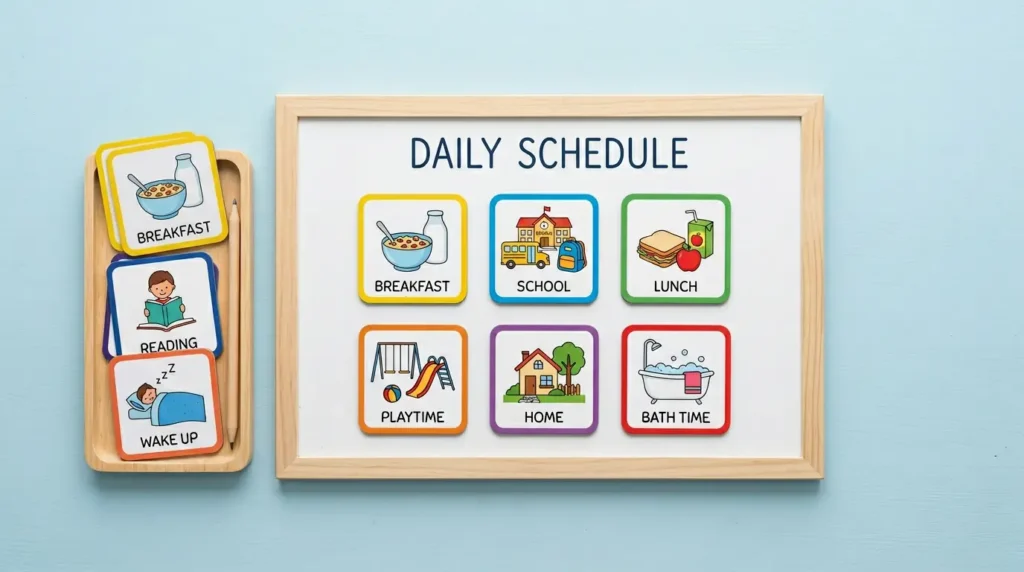
| Autism Spectrum Condition | Visual timetables, sensory breaks, social stories, structured transitions |
| ADHD | Movement breaks, chunked instructions, fidget tools, reward systems |
| Dyslexia | Multisensory phonics, coloured overlays, assistive technology, extra processing time |
| Physical Disabilities | Positioning support, adapted equipment, scribing, mobility assistance |
| Social, Emotional & Mental Health | Nurture groups, emotion coaching, therapeutic play, restorative approaches |
| Sensory Impairments | Modified resources, environmental adjustments, specialist communication methods |
Note: Strategies should be tailored to individual needs and aligned with EHCPs or personalised learning plans where applicable.
Types of SEN Support Specialisations
The field offers diverse specialisation pathways. Understanding these distinctions helps prospective SEN TAs align training choices with career aspirations:
Autism Support Assistant
Focuses specifically on pupils with Autism Spectrum Condition (ASC). Requires expertise in sensory processing, communication differences, and structured teaching methodologies like TEACCH.
Behaviour Support Assistant
Specialises in managing challenging behaviour and supporting pupils with Social, Emotional and Mental Health (SEMH) needs. Training emphasises trauma-informed practice and de-escalation techniques.
Learning Support Assistant
Concentrates on academic interventions for pupils with specific learning difficulties (SpLD) such as dyslexia, dyscalculia, and dyspraxia.
Physical/Sensory Support Assistant
Works with pupils having physical disabilities, visual impairments, or hearing impairments. Often requires additional training in moving and handling, Braille, or British Sign Language.
Communication Support Assistant
Supports children with speech, language, and communication needs (SLCN), often working alongside speech and language therapists.
How to Become a SEN Teaching Assistant: Step-by-Step Guide
Entering SEN support work follows a structured pathway. Here’s the practical roadmap:
Step 1: Obtain Foundational Qualifications
While formal requirements vary by school, most employers expect:
– GCSEs in English and Mathematics (Grade C/4 or above)
– A recognised teaching assistant qualification (Level 2 or Level 3)
– Enhanced DBS clearance for working with children
Step 2: Gain Relevant Experience
Volunteer in schools, nurseries, or youth organisations. Experience with children having additional needs—however informal—strengthens applications considerably.
Step 3: Complete SEN Specific Training
General teaching assistant qualifications rarely cover special educational needs in sufficient depth. A dedicated SEN Teaching Assistant Diploma provides essential specialist knowledge that distinguishes you from generalist candidates.
Step 4: Apply for Entry-Level Positions
Target roles are advertised as “SEN Teaching Assistant,” “Learning Support Assistant,” or “Special Needs Classroom Assistant.” Local authority websites, school job boards, and specialist education recruitment agencies list opportunities.
Step 5: Pursue Continuous Professional Development
SEN practice evolves constantly. Ongoing training in areas like autism awareness, safeguarding, or therapeutic interventions enhances career progression prospects.
SEN Teaching Assistant Qualifications Explained
Navigating the qualification landscape confuses many prospective SEN TAs. Here’s the definitive breakdown:
Level 2 Qualifications
Level 2 Award in Support Work in Schools provides basic entry-level knowledge. Suitable for volunteer positions or general TA roles, but insufficient for dedicated SEN positions.
Level 3 Qualifications
Level 3 Teaching Assistant Diploma represents the gold standard for general TA work. However, the Level 3 SEN Teaching Assistant Diploma specifically targets special educational needs, covering:
– The SEND Code of Practice and legislative framework
– Assessment and planning for pupils with SEN
– Supporting communication and interaction
– Managing behaviour and promoting positive relationships
– Understanding specific conditions (autism, ADHD, dyslexia)
– Working with professionals and parents
Accredited vs Non-Accredited SEN TA Courses
| Feature | Accredited SEN TA Courses | Non-Accredited Courses |
|---|---|---|
| Recognition | Nationally recognised by employers | Variable acceptance |
| Quality Assurance | External verification by awarding bodies | Internal quality control only |
| Credit Transfer | Can contribute to further qualifications | Rarely transferable |
| Career Value | High—preferred by schools and local authorities | Limited—supplementary only |
| Examples | NCFE, CACHE, CPD accredited programmes | General online certificates |
Note: Accredited courses are generally more valuable for long-term career progression and formal qualifications.

Online vs Classroom-Based Learning
Online SEN Teaching Assistant courses offer flexibility for career changers and working professionals. Quality online programmes include tutor support, practical assignments, and placement guidance—delivering equivalent outcomes to face-to-face alternatives.
Career Progression and Salary Expectations
SEN support work offers genuine career architecture, not merely a dead-end job:
Entry Level Positions
– Starting Salary: £18,000–£22,000 (depending on location and school type)
– Roles: General SEN Teaching Assistant, Learning Support Assistant
Experienced Practitioners
– Salary Range: £22,000–£28,000
– Roles: Higher Level Teaching Assistant (HLTA) with SEN specialism, Lead SEN TA coordinating support across year groups
Advanced Pathways
– SENCO Qualification: Experienced SEN TAs can train as Special Educational Needs Coordinators (requires Level 7 qualification)
– Specialist Teaching: Some progress to specialist teacher status for specific learning difficulties
– Therapeutic Roles: Further training enables transition to speech and language therapy, occupational therapy, or educational psychology (requires degree-level study)
Career Change Opportunities
The SEN TA diploma for career change pathway attracts professionals from healthcare, social care, and childcare sectors. Transferable skills in patient support, behaviour management, or child development accelerate transition into education.
Real World Impact: A Day in the Life
Understanding daily realities helps set realistic expectations. Here’s a typical day for a primary school SEN Teaching Assistant supporting a Year 3 pupil with autism:
08:30 — Arrive early to review the visual timetable and prepare sensory resources. Check the pupil’s homeschool communication book for overnight updates.
09:00 — Greet the pupil at the classroom door using their preferred greeting routine. Support transition into the classroom using a “first/then” board.
09:15 — Accompany pupil to whole-class phonics session. Provide individual scaffolding—chunking instructions, using visual prompts, and offering movement breaks.
10:30 — Lead a targeted intervention session in the nurture room: social skills practice using Lego therapy, followed by sensory circuit activities.
11:00 — Support mainstream maths lesson. Adapt worksheets using the pupil’s preferred colour coding. Manage anxiety when the fire alarm sounds unexpectedly.
12:00 — Supervise lunch in the quieter dining provision. Support independent eating skills and social interaction with a peer buddy.
13:00 — Afternoon lessons: assist with science experiment, managing the pupils’ need for predictability while encouraging appropriate risk-taking.
15:00 — Document learning outcomes and behavioural observations. Brief the class teacher on progress and concerns. Update the communication book for parents.
15:30 — Attend weekly multidisciplinary meeting with the SENCO, speech therapist, and educational psychologist to review the pupil’s EHCP targets.
Common Challenges and How to Overcome Them
SEN support work presents distinct challenges. Proactive preparation prevents burnout and enhances effectiveness:
Challenge: Emotional Demands
Supporting children with complex needs proves emotionally taxing. Witnessing frustration, meltdowns, or limited progress affects well-being.
Solution: Establish clear professional boundaries. Access supervision opportunities. Build peer support networks with colleagues who understand the role’s unique pressures.
Challenge: Physical Demands
Personal care, moving and handling, and managing challenging behaviour create physical strain.
Solution: Insist on proper training in manual handling and positive behaviour support. Use appropriate equipment. Report health and safety concerns promptly.
Challenge: Communication Barriers
Some pupils have limited or no verbal communication, creating frustration for both the child and the supporter.
Solution: Invest time in learning alternative communication methods—Makaton, PECS, or AAC devices. Consistency across all communication partners accelerates pupil progress.
Challenge: Working with Families
Parents of children with SEN may present as anxious, defensive, or demanding—often stemming from previous negative experiences with services.
Solution: Prioritise relationship-building. Communicate proactively with positive news, not just problems. Acknowledge parental expertise regarding their child.
Learn SEN Support with Professional Training
Quality training transforms enthusiastic beginners into competent, employable SEN professionals. A comprehensive SEN Teaching Assistant Diploma bridges the gap between generic TA knowledge and specialist SEN expertise.
What Comprehensive SEN Training Covers
Foundational Knowledge:
– The legislative framework: SEND Code of Practice, Equality Act 2010, Children and Families Act 2014
– Categories of special educational needs and their educational implications
– The graduated approach: assess, plan, do, review
Practical Skills:
– Developing and implementing Individual Education Plans (IEPs)
– Differentiation strategies for diverse learners
– Positive behaviour management and de-escalation techniques
– Supporting speech, language, and communication development
– Assisting with personal care with dignity and respect
Professional Competencies:
– Working effectively within multidisciplinary teams
– Partnership with parents and carers
– Safeguarding children with additional vulnerabilities
– Recording, reporting, and maintaining confidentiality
Why Choose an Accredited SEN TA Course?
– Employability: Schools recognise and prefer accredited qualifications from established awarding bodies
– Knowledge Depth: Comprehensive coverage exceeds the superficial treatment in general TA programmes
– Flexibility: Online SEN teaching assistant diploma options accommodate working professionals and career changers
– Certification Value: CPD-accredited SEN teaching assistant diplomas contribute to ongoing professional development requirements
– Career Foundation: Provides the knowledge base for progression to Higher Level Teaching Assistant or SENCO qualifications
Who Benefits from SEN Training?
– Career Changers: Individuals from healthcare, childcare, or social care seeking meaningful education roles
– Existing TAs: General teaching assistants wanting to specialise and increase employability
– Parents: Those with personal SEN experience seeking professional qualifications
– Graduates: Psychology, education, or health graduates gaining practical credentials
– School Support Staff: Midday supervisors, admin staff, or volunteers transitioning to teaching assistant roles

Mental Health Support
The intersection between SEN and mental health receives heightened attention. SEN TAs increasingly require training in anxiety management, emotional literacy, and low-level counselling skills.
Professionalisation of the Role
The distinction between “general TA” and “SEN specialist” hardens. Schools increasingly require specific SEN qualifications rather than relying on generic teaching assistant credentials with minimal additional training.
Conclusion
Special educational needs support represents one of education’s most profound professional opportunities. As a SEN Teaching Assistant, you don’t merely facilitate learning—you transform life trajectories. You enable children who might otherwise struggle to access education, develop confidence, and discover their capabilities.
The pathway into this career has never been more accessible. A SEN Teaching Assistant Diploma provides the specialised knowledge, practical skills, and recognised credentials that distinguish serious candidates from casual applicants. Whether you’re seeking your first role in education, specialising as an existing teaching assistant, or undertaking a complete career change, targeted SEN training accelerates your journey.
The demand for skilled SEN support professionals continues to rise. Schools desperately need competent, compassionate individuals who understand autism, dyslexia, ADHD, and the myriad ways children experience differences. By investing in quality SEN Teaching Assistant training today, you position yourself at the forefront of inclusive education—ready to make a genuine difference while building a secure, meaningful career.
The children who need support are waiting. The training that prepares you is available. The only question remaining is whether you’ll take that first step.
Frequently Asked Questions (FAQs)
Most employers require GCSEs in English and Maths plus a Level 2 or Level 3 teaching assistant qualification. However, dedicated SEN positions increasingly prefer or require specific SEN Teaching Assistant training covering autism, behaviour management, and the SEND Code of Practice.
Level 3 SEN Teaching Assistant diplomas typically require 3–6 months of parttime study. Online SEN teaching assistant courses offer flexibility, allowing learners to progress at their own pace within reasonable timeframes.
CPD accredited online SEN teaching assistant courses from reputable providers carry significant weight with employers. The key factors are accreditation status, curriculum comprehensiveness, and whether the course covers practical competencies alongside theory.
Salaries range from £18,000–£22,000 for entrylevel positions, rising to £22,000–£28,000 for experienced practitioners. Higher Level Teaching Assistants with SEN specialisms can earn £25,000–£32,000. Actual figures vary by location, school type, and local authority
Progression routes include Higher Level Teaching Assistant status, SENCO qualification (requires degree), specialist teacher training, or transition into therapeutic roles like speech and language therapy with further study.