
Becoming a child psychologist in the United Kingdom offers a rewarding career path dedicated to improving young people’s mental health and developmental outcomes. Whether you aspire to work within the NHS, private practice, or educational settings, understanding the regulated pathway is essential for success.
Featured Snippet Definition: A child psychologist is a chartered professional registered with the Health and Care Professions Council (HCPC) who specialises in assessing, diagnosing, and treating psychological, emotional, and behavioural difficulties in children and adolescents. In the UK, this title requires specific BPS-accredited qualifications, doctoral-level training, and statutory registration to practice clinically.
What Is a Child Psychologist?
A child psychologist (often referred to as a clinical child psychologist or paediatric psychologist) applies psychological principles to support children and young people experiencing mental health challenges, developmental disorders, learning difficulties, or behavioural problems.
Unlike general psychologists, child psychology specialists possess expertise in developmental psychology, attachment theory, and age-appropriate therapeutic interventions. They work across diverse settings, including:
– NHS Child and Adolescent Mental Health Services (CAMHS)
– Paediatric hospital departments
– Educational psychology services
– Private clinical practices
– Social care and safeguarding teams
– Research and academic institutions
The profession is protected in the UK; only HCPC-registered practitioners may legally use the title “Clinical Psychologist” or “Child Psychologist” in a clinical capacity.
Why Choose a Career in Child Psychology?
The demand for qualified child mental health professionals has never been higher. With NHS data indicating that 1 in 5 children experience mental health difficulties, the UK faces a significant shortage of chartered child psychologists.
Key benefits of this career path:
– Meaningful impact: You’ll facilitate life-changing interventions during crucial developmental years
– Job security: HCPC registration creates portable, in-demand qualifications across the UK
– Diverse specialisms: Options include neuropsychology, forensic child psychology, and educational psychology
– Competitive remuneration: NHS Band 78a salaries range from £43,742 to £57,349, with private practice earning potential significantly higher
– Continuous development: The field evolves rapidly with neuroscience and trauma-informed care advances
Types of Child Psychology Careers in the UK
Understanding the distinction between related specialisms helps clarify your child psychologist career path
| Career Path | Primary Setting | Key Responsibilities | Registration Body |
|---|---|---|---|
| Clinical Child Psychologist | NHS CAMHS, hospitals | Assessment, diagnosis, therapy for complex conditions | HCPC |
| Educational Psychologist | Local authorities, schools | Learning difficulties, SEN support, systemic intervention | HCPC |
| Counselling Psychologist | Private practice, charities | Therapeutic support, mild-moderate difficulties | HCPC |
| Forensic Child Psychologist | Youth offending teams, secure units | Risk assessment, criminal behaviour interventions | HCPC |
| Child Psychotherapist | NHS, private clinics | Deep psychoanalytic work, severe trauma | UKCP/BPC (not HCPC) |
Note: These career paths differ in training routes, work settings, and regulatory bodies, but all focus on supporting children’s mental health and development.
Step-by-Step Guide to Becoming a Child Psychologist
The pathway to becoming a chartered child psychologist in the UK follows a structured, regulated route. Here’s exactly how to navigate it:
Step 1: Obtain Appropriate GCSEs and A-levels
Requirements:
– GCSEs: Minimum 5 grades 94 (A*C), including Mathematics, English Language, and Science (preferably Biology or Psychology)
– A-Levels: Typically AABAAA including at least one science subject (Psychology, Biology, Chemistry, Physics, or Mathematics)
Pro tip: While not mandatory, studying A-Level Psychology provides foundational knowledge of research methods and developmental theories. Work experience with children (volunteering, teaching assistance, youth work) significantly strengthens your university application.
Step 2: Complete a BPS Accredited Undergraduate Degree
You must complete a BPS-accredited psychology degree (BSc or BA) to gain eligibility for chartered membership. The programme must confer Graduate Basis for Chartered Membership (GBC)—verify this on the British Psychological Society website before applying.
Degree specifics:
– Duration: 3 years full-time (4 years with placement)
– Core components: Biological psychology, cognitive psychology, developmental psychology, research methods, and statistics
– Competition: Top universities (Oxford, Cambridge, UCL, Bath) require A*AA and demonstrate relevant experience
Alternative route: If your degree isn’t BPS-accredited, complete a psychology conversion course in the UK (MSc or PGDip) to obtain GBC status.
Step 3: Gain Graduate Basis for Chartered Membership (GBC)
Upon graduating with a 2:1 or above from your BPS-accredited programme, apply for GBC through the BPS. This membership level is mandatory before progressing to doctoral training.
Cost: Approximately £150 annual membership (reduced student rates available)
Step 4: Accumulate Relevant Work Experience
Doctoral programmes are highly competitive (acceptance rates often 1015%). You need 23 years of psychology work experience with children to secure a training place.
High-value experience includes:
– Assistant Psychologist posts in CAMHS or paediatric settings
– Mental Health Support Worker roles in adolescent inpatient units
– Research Assistant positions in developmental psychology labs
– Teaching Assistant works with SEN (Special Educational Needs) children
– Support Worker roles in children’s residential care
Competitive advantage: Publish research, present at conferences, or complete an MSc in Child and Adolescent Psychology to demonstrate commitment.
Step 5: Complete Doctoral-Level Training
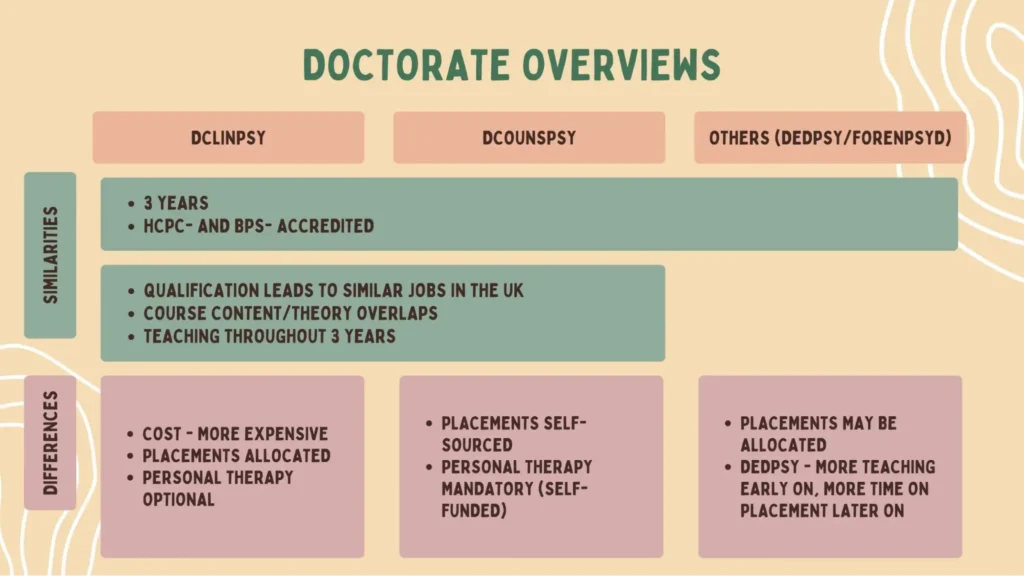
To practice as a clinical child psychologist in the UK, you must complete one of these doctoral programmes:
Option A: Doctorate in Clinical Psychology (DClinPsy)
– Duration: 3 years full-time (including placement)
– Funding: NHS-funded with Band 6 salary (£37,000+ annually)
– Content: Generic adult training with specialist child placements
– Application: Via the Clearing House for Postgraduate Courses in Clinical Psychology
Option B: Doctorate in Educational Psychology (DEdPsy)
– Duration: 3 years (including professional placement)
– Funding: Bursary-based through local authorities
– Focus: Learning, development, and educational systems
– Entry: Requires experience in educational settings
Alternative for Counselling Route: Professional Doctorate in Counselling Psychology (4 years, self-funded, ~£20,000 total)
Step 6: Register with the HCPC
Upon doctoral completion, apply for HCPC registration for psychologists in the UK:
– Submit evidence of doctoral qualification
– Provide character references and health declarations
– Pay registration fee (~£200 annually)
– Maintain CPD (Continuing Professional Development) standards
Without HCPC registration, you cannot legally use protected titles or practice clinically.
Step 7: Pursue Specialist Child Psychology Placements
Postqualification, secure child psychologist training and experience in the UK through:
– Newly Qualified Psychologist (NQP) posts in CAMHS
– Paediatric liaison positions in hospitals
– Looked After Children (LAC) specialist teams
– Neurodevelopmental assessment services (ASD/ADHD clinics)
After 23 years of post-qualification experience, you may specialise exclusively in child and adolescent work.

How Long Does It Take to Become a Child Psychologist?
Total timeline: Typically 810 years from starting your undergraduate degree to HCPC registration.
Breakdown:
-Undergraduate degree: 3 years
– Relevant experience: 23 years
– Doctorate: 3 years
– HCPC registration process: 36 months
Accelerated pathways:
– Psychology conversion course: Reduces timeline if you hold a non-psychology degree (saves redoing undergraduate)
– Integrated undergraduate-doctorate: Some NHS trusts offer apprenticeship routes (rare, 6-year programmes)
Child Psychologist Salary and Career Prospects UK
NHS Agenda for Change Pay Scales (2026 estimates):
– Trainee Clinical Psychologist (Doctorate): £37,000£40,000 (Band 6)
– Newly Qualified Psychologist: £43,742 (Band 7)
– Specialist Child Psychologist: £50,000£57,000 (Band 8a)
– Consultant/Lead Psychologist: £65,000£80,000+ (Band 8b8c)
Private sector earnings: £80£150 per hour for independent practice; private autism assessment clinics offer £70,000£100,000+ annually.
Career progression:
– Clinical Director (CAMHS service management)
– Consultant Psychologist (highly specialist roles)
– Academic/Research Leadership (Professor of Developmental Psychology)
– Forensic Child Psychology (expert witness work, lucrative private practice)
Essential Skills and Qualities
Key competencies required for a successful child psychology career path in the UK
| Skill Category | Specific Competencies | Development Methods |
|---|---|---|
| Technical | Psychometric testing, diagnostic interviewing (ADOS, WAIS), CBT/DBT/EMDR modalities | Doctoral training, specialist workshops |
| Developmental | Attachment theory, neurodiversity-affirming practice, trauma-informed care | Child development courses, infant observation |
| Communication | Age-appropriate language, family systemic work, multidisciplinary liaison | Roleplay, supervision, reflective practice |
| Resilience | Managing vicarious trauma, ethical decision-making, boundary maintenance | Personal therapy, peer supervision |
| Research | Data analysis, outcome measurement, evidence-based practice | MSc research projects, audit cycles |
Note: These skills are essential for ethical, effective, and evidence-based practice in UK child psychology roles across clinical, educational, and therapeutic settings.
Common Challenges and How to Overcome Them
Challenge 1: Doctoral programme competitiveness
- Solution: Diversify experience across clinical, research, and voluntary sectors. Consider an MSc in Research Methods or Child Psychology to strengthen academic credentials.
Challenge 2: Funding limitations
- Solution: Clinical doctorates are NHS-funded with salaries. Educational psychology bursaries cover tuition. Avoid self-funded counselling psychology routes unless financially secure.
Challenge 3: Emotional toll of child trauma work
- Solution: Mandatory supervision in NHS roles; engage in personal therapy; maintain strict work-life boundaries; develop nonwork identities.
Challenge 4: HCPC registration delays
- Solution: Apply 6 months before qualification completion; ensure all placement documentation is signed; maintain clean DBS checks throughout training.
Learn Child Psychology with Professional Training
While the doctoral route remains essential for clinical practice, introductory child psychology courses in the UK provide valuable foundations for aspiring professionals, teaching assistants, and healthcare support workers.
Course Overview
Our BPS-aligned Child Psychology Certificate offers foundational knowledge in developmental stages, attachment theory, and common childhood conditions (ASD, ADHD, anxiety disorders). Designed for those exploring entry-level child psychology qualifications in the UK, this programme provides academic grounding before committing to the 8year doctoral pathway.
Key Benefits
– University preparation: Understand whether the clinical route suits your temperament and career goals
– Career progression: Enhance applications for Assistant Psychologist or CAMHS support worker roles
– Immediate application: Strategies for supporting children in educational or care settings right now
Skills You Will Gain
– Developmental milestone assessment
– Behavioural intervention planning (ABC charts, functional analysis)
– Traumainformed communication techniques
– Safeguarding and child protection protocols
Certification Value
While not qualifying you as an HCPC-registered psychologist, this certificate demonstrates commitment to psychology work experience with children and provides CPD hours recognised by employers in the education and social care sectors.
Career Opportunities
Graduates typically progress to: Psychology degrees, teaching assistant specialisms, residential childcare management, family support work, or mental health advocacy roles.
Conclusion
The journey to becoming a child psychologist in the UK demands significant dedication—typically spanning a decade of education, experience, and doctoral training. However, for those committed to transforming children’s mental health outcomes, the career offers unmatched professional fulfilment.
Success requires meticulous planning: securing BPS accreditation early, accumulating diverse psychology work experience with children, and navigating the competitive Doctorate in Clinical Psychology application process. The investment yields HCPC registration—a portable, respected qualification opening doors across the NHS, educational, and private sectors.
Whether you’re a student researching A-level requirements, a graduate considering psychology conversion courses, or a career changer exploring child mental health training, the pathway remains open to those with academic capability, emotional resilience, and genuine commitment to young people’s wellbeing.
Ready to start your journey? Begin by exploring BPS-accredited undergraduate programmes or entry-level certificates to test your affinity for this rewarding specialism. The UK’s children need more qualified professionals—your expertise could change a young life forever.
Frequently Asked Questions (FAQs)
You need a BPSaccredited psychology degree (or conversion course), Graduate Basis for Chartered Membership, 23 years relevant experience, completion of a Doctorate in Clinical or Educational Psychology, and HCPC registration. The process typically takes 810 years.
You require a BPSaccredited undergraduate degree in psychology (BSc/BA) or a conversion course if your first degree is in another subject. Without BPS accreditation, you cannot progress to doctoral training.
Expect 810 years total: 3 years undergraduate, 23 years gaining experience, and 3 years doctoral training. Some candidates complete this faster with integrated programmes or prior relevant degrees.
Yes. High demand in CAMHS, excellent job security through HCPC registration, diverse specialism options, and competitive salaries make it a rewarding longterm career despite the lengthy training pathway.
Primary employers include NHS CAMHS teams, paediatric hospital departments, local authority educational psychology services, private clinics, youth offending teams, and increasingly, independent autism assessment services.